Song Meaning
The lyrics open with a provocative question, "Can I lift my dress?" It's an intimate, almost performative offer, set against the melancholic backdrop of "dying light." This immediate vulnerability is complicated by the speaker's self-conscious observation that their "white undersides" look much better in that fading glow.
A significant internal conflict emerges with the introduction of "a kid in there." This figure is described as "big and dumb" and "kinda scared," feeling "too old" and "just looking for a ride." This suggests a deep-seated insecurity or a sense of arrested development, contrasting sharply with the initial outward display of confidence or control. The speaker appears to grapple with an inner self that feels out of place and vulnerable.
The shift from an intimate offer to a grand, public gesture is particularly striking. The speaker declares, "I'll lift it to the ceiling tiles / Of stadiums and shrines." This transforms a personal act into something performed for a vast, perhaps indifferent, audience. The mundane "ceiling tiles" within these imposing structures create an unexpected juxtaposition, hinting at the ordinary nature of even the most public displays, or perhaps a sense of being observed from above.
The lyrics effectively build tension through a series of emotional reversals. The initial vulnerability gives way to a defiant assertion, "I'll tell you that it's mine," reclaiming agency. This is immediately followed by a jarring, almost defensive apology for death, "your mother died / But that one wasn't my fault." This sudden disavowal of responsibility, coupled with a broader lament, underscores a pervasive sense of blame or judgment the speaker feels. The repeated, urgent plea, "knives away from my eyes," powerfully concludes the piece, revealing a deep-seated fear of harm and a desperate need for protection from unseen threats.
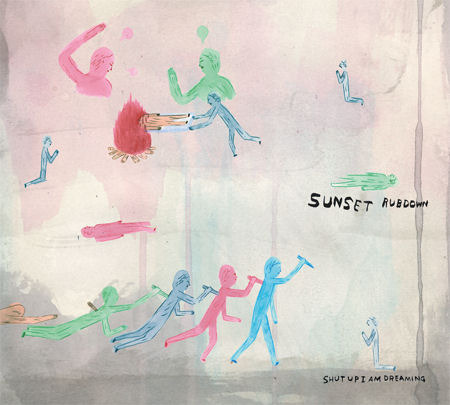
 View Artist