Song Meaning
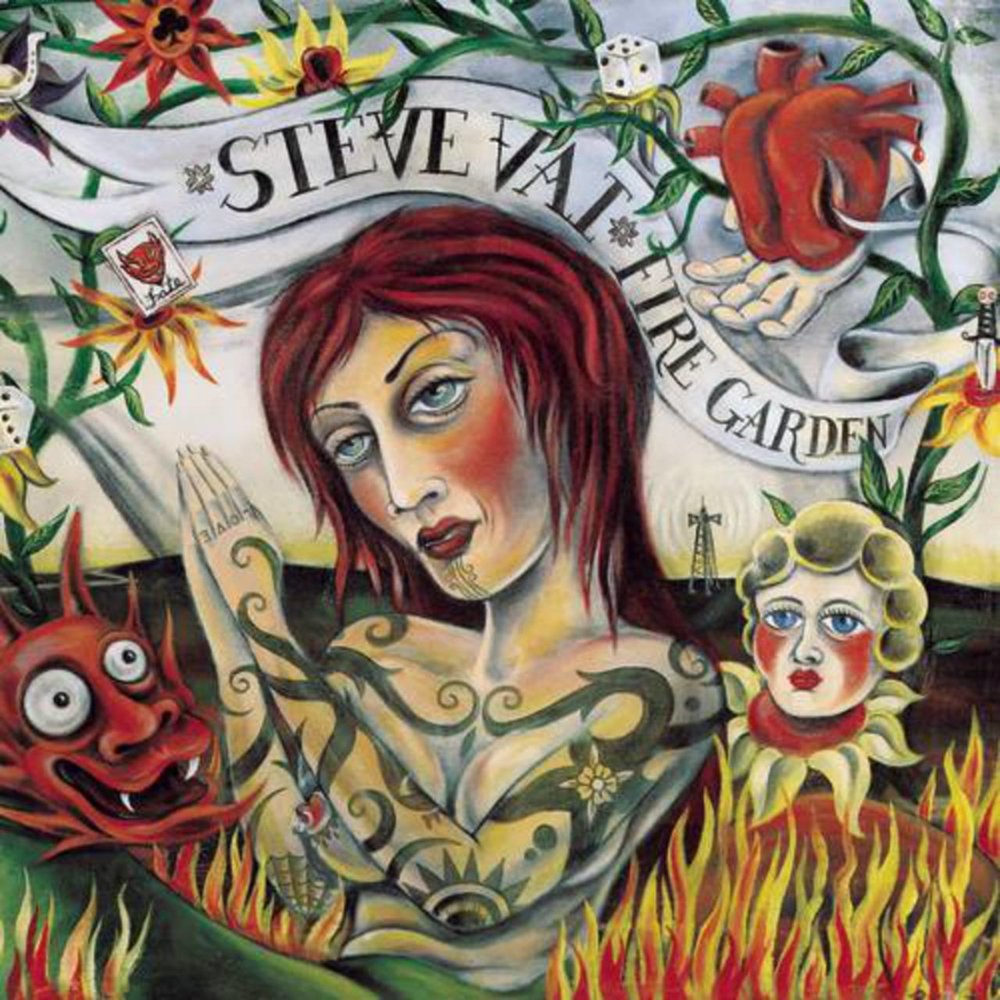
Steve Vai's "Marko Bošnjak - Poison Cake (Traducción al Español)" is less a conventional song and more a sonic odyssey, a sprawling instrumental tapestry woven from disparate threads. Dissecting the 'song meaning' requires abandoning traditional lyrical analysis and instead focusing on the architecture of sound itself. The track, seemingly a suite of movements rather than a unified whole, presents a series of contrasting aural landscapes. The opening "Bangkok" segment likely evokes the frenetic energy and exoticism of the Thai capital, perhaps through dissonant chords or rapid-fire melodic runs. This segues into the "Fire Garden Suite," the heart of the piece, suggesting a controlled burn, a deliberate exploration of musical intensity and release. Given Vai's penchant for virtuosic guitar work, expect pyrotechnics of the fretboard.
The subsequent subdivisions of the "Fire Garden Suite" – "Bull Whip," "Pusa Road," "Angel Food," and "Taurus Bulba" – offer further clues, albeit cryptic ones. "Bull Whip" hints at a sharp, percussive rhythm, a sense of urgency and perhaps even a touch of danger. "Pusa Road," named after a road in Delhi, India, potentially introduces Eastern musical scales or rhythmic patterns, a nod to the region's rich musical heritage. In stark contrast, "Angel Food" suggests lightness, ethereal textures, perhaps a moment of respite from the intensity of the preceding sections.
Finally, "Taurus Bulba," a reference to a novel of the same name, injects a dose of literary intrigue. The novel, known for its themes of Cossack life and rebellion, might translate into a more aggressive, rhythmically driven passage, imbued with a sense of defiance. Overall, the song isn't about a easily summarized narrative, but rather a sequence of evocative soundscapes, each designed to trigger a specific emotional or imaginative response in the listener. It's a journey through contrasting moods and textures, demanding active listening and a willingness to embrace ambiguity. Steve Vai, through this instrumental exploration, invites us not to understand, but to *feel*.
 View Artist