Song Meaning
The lyrics paint a picture of disorienting circularity and existential questioning. The opening lines immediately establish a sense of being adrift, "Two sided through four sides we slide," suggesting a lack of solid ground or clear direction. This feeling is amplified by the repeated questions, "Are we up, are we down?" and "Twirling round and round," creating a dizzying effect that mirrors the confusion of navigating life's uncertainties. The phrase "self-made worlds" hints at a personal, perhaps isolating, reality that the narrator inhabits.
The narrative then shifts to a personal relationship, where a "twining friendship failed." This failure seems to have left the narrator feeling stuck or defined by past connections, "nailed to some obscure note." There's a weariness here, a sense that despite the passage of time, the narrator hasn't escaped a certain emotional or relational confinement. The question "Do we rote?" suggests a fear of living a life on autopilot, repeating patterns without genuine engagement.
The most striking aspect of the writing is the juxtaposition of chaotic movement with the eventual, almost forced, resolution. The initial "twirling round and round" and the feeling of being "nailed" contrast sharply with the repeated refrain in the outro: "Changes into harmony / Revolutions oiled / To that symphony." This suggests a deliberate, perhaps even mechanical, process of finding order or beauty, as if the inherent messiness of life is being smoothed out and fitted into a pre-existing, harmonious structure. The "self-made worlds" seem to be the very crucible where these transformations occur.
Ultimately, the lyrics resonate because they capture the universal struggle of seeking meaning and stability amidst personal upheaval and relational failures. The writing effectively uses imagery of motion and confinement to convey a sense of being lost, only to offer a glimpse of a constructed peace. The final, repetitive resolution implies that finding harmony might be an active, almost engineered, process rather than a natural state.
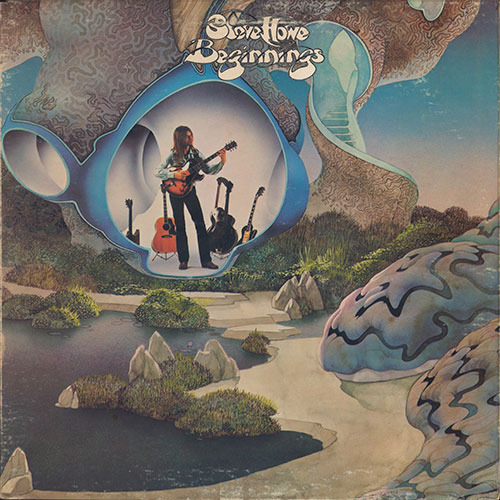
 View Artist