Song Meaning
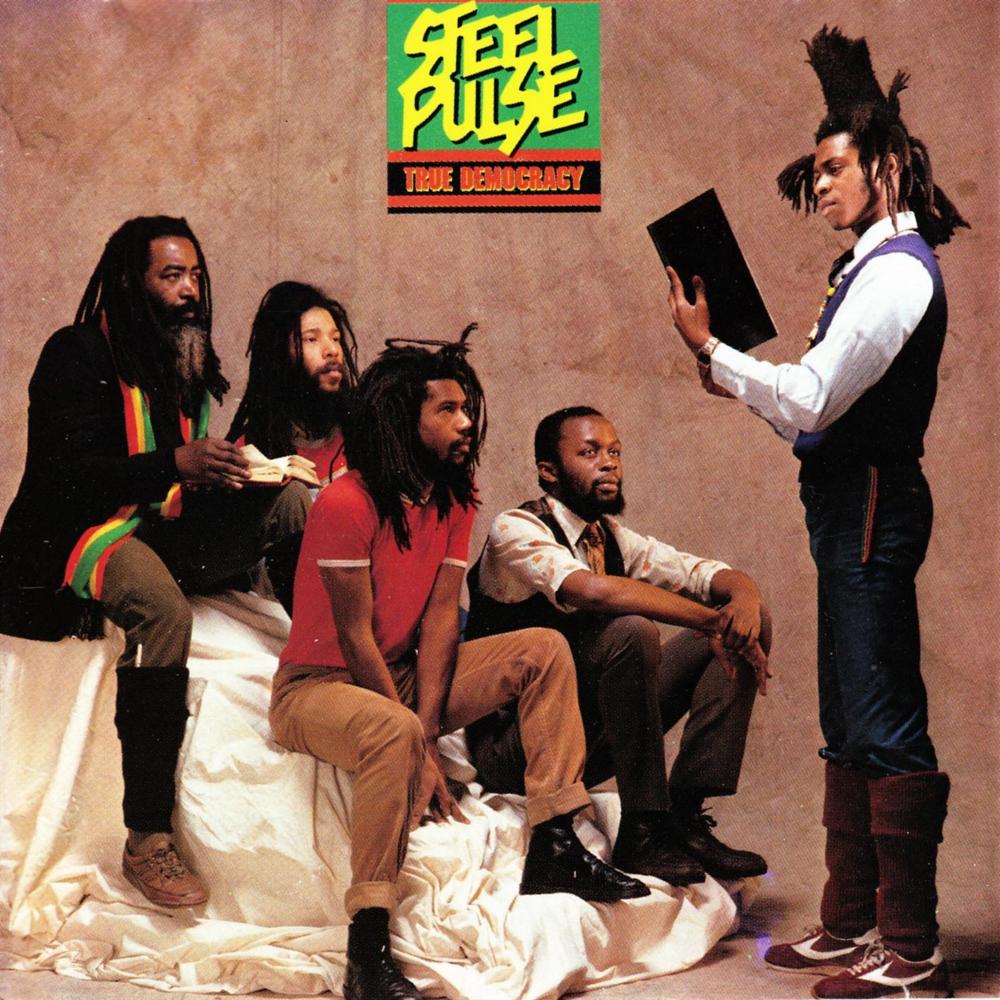
These "lyrics" aren't a story in the traditional sense; they're a meticulous ledger. They immediately establish a formal framework, detailing ownership and creative contributions. It's a foundational document, laying out the precise architecture behind the music. The 1982 copyright anchors the work to a specific moment.
A subtle tension emerges between individual authorship and collective execution. David Hinds is credited with writing "All songs," asserting a singular creative vision at the core. Yet, the subsequent listings reveal a deep collaborative effort, with producers, engineers, and a full band of "Musik Makers" each playing distinct, named roles. This highlights the dual nature of music creation: the solitary spark and the communal forge.
The craft here lies in the precise, almost legalistic enumeration. Each name is paired with a specific function—"Bass," "Drums," "Keyboards & Vocals," "Lead guitar." The singular exception, "Your House" written by Phonso Martin, stands out, a specific detail amidst the broader claims, suggesting a moment of shared or distinct creative input within the larger framework. This structured listing isn't just informative; it's an act of formal recognition.
Ultimately, these "lyrics" are effective because they pull back the curtain on the often-unseen machinery of music. They underscore that behind every melody and rhythm lies a network of skilled individuals and a clear system of ownership. It grounds the ephemeral art in concrete facts, making the listener appreciate the intricate web of talent and business that brings a track to life. It's a declaration of who built what, and when.
 View Artist