Song Meaning
The lyrics present a complex invocation of Shamash, the Mesopotamian Sun God, blending ancient Near Eastern mythology with religious and legalistic references. The narrator directly addresses Shamash, acknowledging its power as the "fire burning Sun" and "Supreme ruler of Akkadia." However, this reverence is immediately complicated by the declaration, "I bear the fire from hell below," suggesting a duality or a pact where the narrator channels infernal forces under the guise of divine light. This tension is amplified in the pre-chorus with the Latin phrases "In Nomini Domini" (In the Name of the Lord) and "In Nomini Diaboli" (In the Name of the Devil), explicitly linking divine and demonic power.
The core conflict seems to reside in this juxtaposition of sacred and profane, light and dark. Shamash is also described as the "center of the Soul" and "Agatho's Daemon" (a good spirit), yet the narrator claims to carry "fire from hell." The repeated phrase "Behold, fire, behold" acts as a powerful, almost ritualistic incantation, emphasizing the transformative or destructive nature of this fire. The inclusion of "ex nihilo" (out of nothing) further adds to the sense of creation and destruction, hinting at a primal force at play.
The bridge is a dense tapestry of allusions, weaving together disparate concepts like the "Root of David," "Hammurabi code," and "Mount Sinai." These references, spanning biblical lineage, ancient law, and religious lawgiving, create a sense of cosmic order being challenged or reinterpreted. Phrases like "Eradicate," "Violate the Sabbath," and "Eye for an eye" suggest a deliberate subversion of established norms and divine commandments. The act of "Stabbing the heavens" is a particularly striking image of defiance against celestial authority, even as "Splendor of light" is invoked.
Ultimately, the lyrics construct a powerful, albeit ambiguous, narrative of a figure wielding immense, dualistic power. The repeated "Shamash, Ira Deorum" (Shamash, Wrath of the Gods) in the chorus, coupled with the final "Retaliate," suggests that this invocation is not merely for power, but for vengeance or a forceful rebalancing of cosmic justice. The effectiveness lies in the stark contrasts and the sheer density of potent imagery, forcing the listener to grapple with the unsettling fusion of divine and infernal, order and chaos.
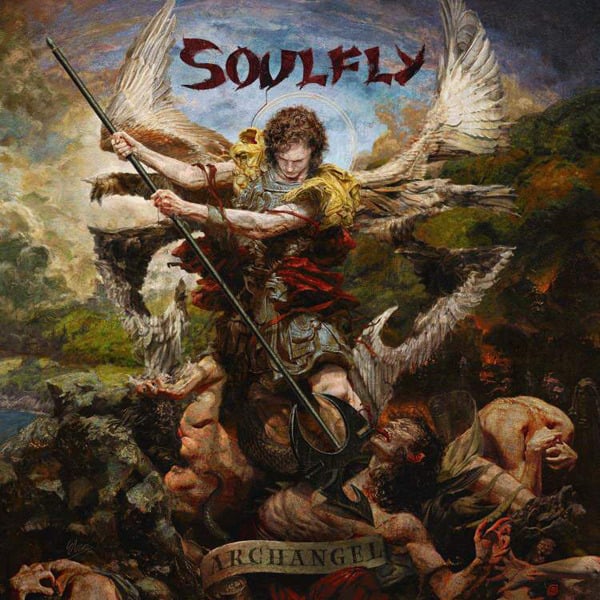
 View Artist