Song Meaning
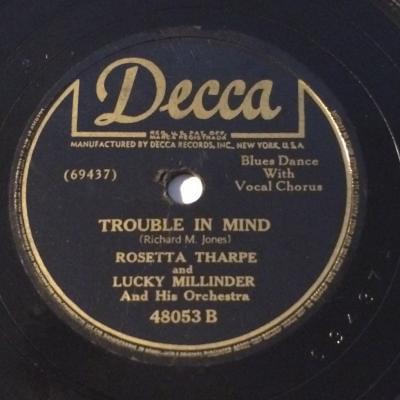
Sister Rosetta Tharpe's "Trouble in Mind" isn't just a blues lament; it's a raw, almost unbearably honest glimpse into the cyclical nature of depression and resilience. The surface reading is straightforward enough: romantic betrayal, a mind tormented, a near-suicidal ideation played out via the stark image of the railroad track. Yet, Tharpe, even in the depths of despair, refuses complete surrender. The repeated line, "But I won't be blue always / 'Cause that sun will shine in my back door someday," is not naive optimism, but a hard-won acknowledgement that even the darkest nights eventually yield to dawn. It's the blues as a form of self-preservation.
The genius of Tharpe’s interpretation lies in the tension between the lyrics' overt sadness and the undercurrent of defiance. The lines "Sometimes I feel like living / And sometimes I feel like dying" aren't a passive admission of defeat. Instead, they highlight the internal battle, the push and pull between the will to succumb and the instinct to survive. This internal conflict is further amplified by the performance style, where the gospel-infused delivery adds a layer of spiritual fortitude to the secular pain. It suggests that even in the throes of emotional turmoil, a deeper faith—whether in a higher power or simply in one's own capacity to endure—remains a potent force.
Ultimately, the song meaning of "Trouble in Mind" resides in its unflinching portrayal of emotional vulnerability coupled with an unwavering, if fragile, hope. The "laughing just to keep from crying" is a particularly poignant image. It's the mask we wear, the performance we give to the world, while privately battling demons. Tharpe acknowledges this duality, this human tendency to compartmentalize pain, and in doing so, offers not just a song, but a shared experience, a testament to the enduring power of the human spirit to find light even in the darkest recesses of the mind.