Song Meaning
The lyrics paint a picture of complete, encompassing presence, starting with the simple declaration "את כולך" (all of you). This initial statement is then expanded, suggesting a totality that extends beyond the immediate "את" (you) and "עד" (until), pushing into abstract realms like "מעבר לאת" (beyond the 'you') and "מעבר לקיר" (beyond the wall).
The central tension seems to revolve around an intense, almost overwhelming perception of another person. The imagery of a wall acting as a "משען בגפך" (support for your back) implies a deep, perhaps even burdensome, intimacy where the other's presence is a constant, foundational element. This closeness is so profound that it seems to blur the lines of individual perception, leading to a state where the narrator's own "עיני בייני" (my eyes between) are consumed by the "בבואת עילומך" (reflection of your hidden self) "על הסף" (on the threshold).
The most striking craft element is the recursive and expansive use of "את" and "עד," creating a sense of infinite reach and absorption. The phrase "את כולך" is repeated, anchoring the listener before the lyrics spiral outwards. The poem uses a dense, almost incantatory style, where the physical (wall, back) gives way to the metaphysical (beyond the 'you', reflection of hidden self), suggesting a love or obsession that transcends ordinary boundaries.
This lyrical construction is effective because it mirrors the feeling of being utterly consumed by another person. The relentless expansion of "until" and the absorption of the narrator's vision into the other's "hidden self" create a powerful emotional resonance. It captures that dizzying sensation when another's presence becomes so dominant it eclipses one's own sense of self, leaving only their reflection on the edge of perception.
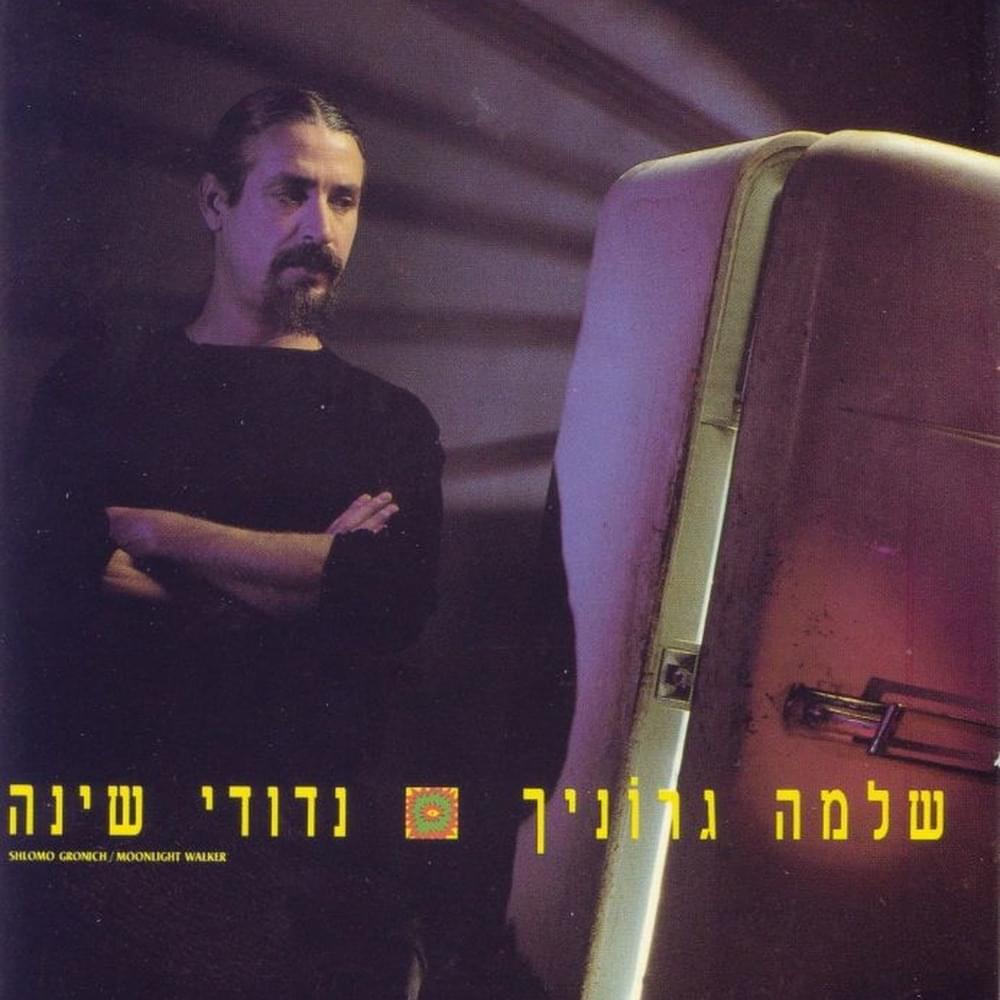
 View Artist