Song Meaning
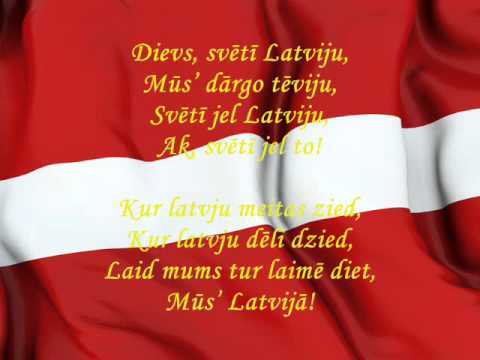
This anthem opens with a direct, fervent plea: "God, bless Latvia." The repetition of "svētī Latviju" (bless Latvia) underscores a deep-seated hope and a spiritual reliance for the nation's well-being. It establishes an immediate tone of earnest supplication, framing the country as a beloved entity worthy of divine favor.
The lyrics then paint a picture of national vitality, focusing on its people. The imagery of "Latvian daughters bloom" and "Latvian sons sing" suggests a flourishing society, full of life and joy. This vision of a vibrant populace is directly linked to the desire for "happiness to dance" within Latvia, highlighting a profound connection between the people's prosperity and their homeland.
The craft here is in its simplicity and directness. The language is unadorned, relying on powerful, evocative nouns and verbs like "zied" (bloom) and "dzied" (sing). The structure is a clear invocation followed by a vision of national flourishing, creating a powerful emotional arc from prayer to hopeful anticipation. The repeated "svētī jel" (bless, please) adds a layer of urgent, heartfelt appeal.
What makes these lyrics resonate is their pure, unadulterated expression of love for country and hope for its future. It's a straightforward articulation of national pride and a collective wish for prosperity, grounded in the image of a healthy, happy populace. The direct address to a higher power and the focus on the people's well-being create a universally understood sentiment of patriotic devotion.
 View Artist