Song Meaning
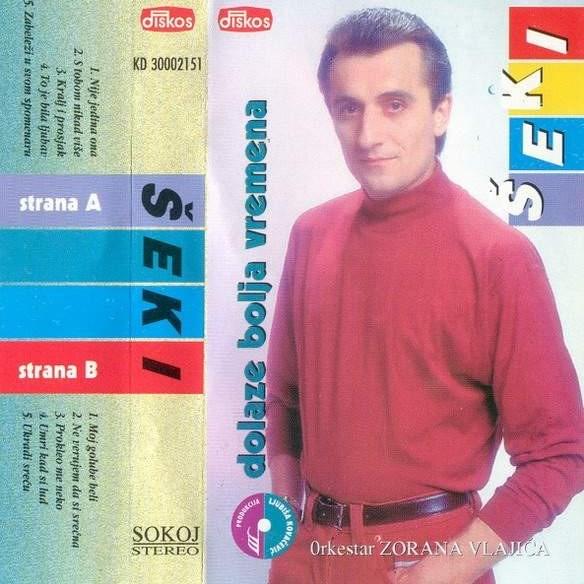
This track opens with a stark command: "Zabeleži u svom spomenaru da si nekad moja ljubav bila." The narrator insists on a written record of a past relationship, a tangible proof against the fading of memory. This isn't a gentle plea; it's a demand for documentation, setting a tone of profound, almost desperate, finality. The immediate follow-up, "I zapiši na rastanku našem da je kiša nemilice lila," paints a dramatic backdrop for this parting, suggesting a sorrow so immense it mirrors a downpour.
The core tension here is the contrast between the permanence the narrator seeks through writing and the ephemeral nature of love itself. While the narrator implores their former lover to "Zabeleži u svom spomenaru sva imena što su tebi znana," they immediately pivot, hoping "Al' u srce probodeno strelom neka naša budu upisana." This suggests a desire for a love that transcends mere names in a book, a love so potent it leaves an indelible mark, even if it's a mark of pain. The repeated refrain, "Kô što smo se voleli nas dvoje neće više niko i nikada," amplifies this, presenting their past love as a singular, unrepeatable event.
The most striking craft element is the persistent motif of the "spomenar" – the scrapbook or memory book. It serves as a physical manifestation of memory, a place where the narrator attempts to freeze a moment in time. The repeated instruction to write down details – "Zabeleži u svom spomenaru" – highlights the narrator's struggle to accept the end. They are trying to preserve not just the fact of the relationship, but the intensity of the emotion, even as they acknowledge the finality of their separation. The lyrics suggest a deep-seated fear of being forgotten, a need to ensure that even if the love is gone, its significance is not erased.
Ultimately, the effectiveness of these lyrics lies in their raw, unvarnished portrayal of heartbreak and the desperate measures one might take to hold onto what's lost. The narrator isn't just sad; they are actively trying to engineer their own remembrance, to ensure their past love is recorded and acknowledged. The insistence on writing, coupled with the hyperbolic claim that their love was unique and unrepeatable, creates a powerful sense of both profound loss and defiant memory.
 View Artist