Song Meaning
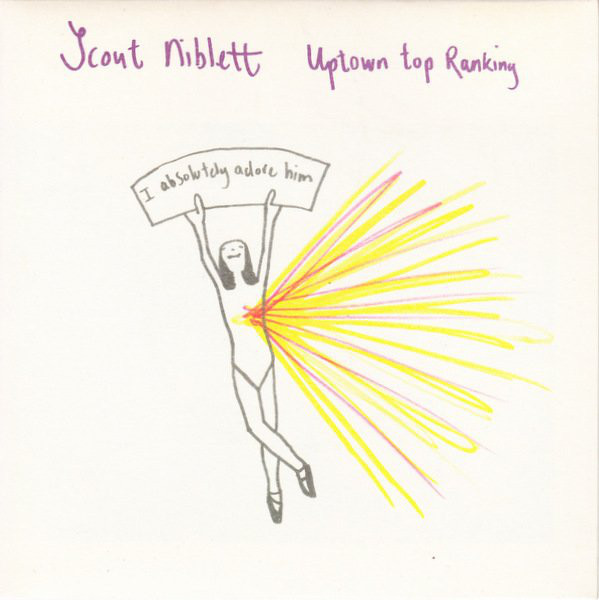
Scout Niblett's rendition of "Uptown Top Ranking" slices through the original's buoyant energy, leaving a stark, almost confrontational core. Where the Althea and Donna version revels in playful boasts of romantic and social dominance, Niblett strips away the sweetness, exposing a brittle vulnerability beneath the surface. The repeated assertion, "I got no style, I'm simply rules," becomes less a statement of fact and more a desperate attempt at self-definition. It's as if the singer is attempting to control the narrative, preemptively deflecting criticism by admitting her perceived lack of flair. She's setting boundaries, daring the listener to find her wanting.
The phrase "Uptown Top Ranking," repeated mantra-like, loses its celebratory feel. Instead, it echoes as a hollow claim, a yearning for validation rather than a confident declaration of status. The line, "If love is all you bring, why're you tired of everything?" is particularly devastating in Niblett's delivery. It hints at an underlying exhaustion, a disillusionment that love, even at its most ardent, can't fill the void. This weariness stands in stark contrast to the original's carefree vibe, suggesting a deeper, more complex emotional landscape.
Niblett's interpretation transforms "Uptown Top Ranking" from a lighthearted reggae hit into an indie rock lament. The song's meaning shifts from a celebration of popularity to an exploration of self-doubt and the isolating effects of rigid self-control. By emphasizing the lyrics' inherent contradictions and stripping away the music's inherent joy, Niblett reveals a fragility that's both haunting and deeply compelling. It’s a fascinating case study in how arrangement and delivery can completely invert a song's perceived meaning, turning a boast into a plea.
 View Artist