Song Meaning
The lyrics paint a picture of intense, almost obsessive devotion, tinged with a deep sense of loss and conflict. The opening lines, "Mira al sol y acaríciame / Resplandor que eclipsa al temor…", set a tone of seeking solace and light, yet immediately pivot to a stark declaration: "Nuestro amor no es cosa de dos / Mi jardín florece sin ti." This suggests a love that exists unilaterally or is perhaps unrequited, with the narrator's world continuing to bloom independently, creating an immediate emotional dissonance.
The core tension arises from a forced devotion, possibly to a higher power or an unyielding ideal, that clashes with personal desire. The narrator states, "Mi creador porta una obsesión / No elegí yo su religión…" This implies an external force dictating belief or commitment, which the narrator feels compelled to follow despite personal feelings. The repeated "Quiero mirarte, quiero besarte…" section powerfully conveys an overwhelming longing for a specific person, a desire that seems to be suppressed or redirected by this imposed "obsession."
The imagery shifts dramatically in the second half, becoming darker and more visceral. The refrain "No salga el sol, matices negros / Tu piel no está, si tu recuerdo" evokes a world plunged into perpetual night, where the absence of the beloved is absolute, leaving only a painful memory. The line "Cristales, tintados, con sangre de celos" is particularly striking, visualizing jealousy as a stained, fractured lens through which reality is perceived, a "martirio" that paradoxically exists "sin miedo"—without fear, perhaps due to its overwhelming, all-consuming nature.
Ultimately, the lyrics articulate a profound internal struggle between imposed duty and personal yearning, resulting in a landscape of emotional torment. The narrator's "lágrimas conservan tu rabia" suggests that the pain of absence and the conflict of devotion are intertwined, fueling a destructive cycle. The "muerte que nace" and "río que brota" point to a continuous, generative sorrow, where even the source of life is tainted by this unresolved anguish and the anticipation of a "vil derrota."
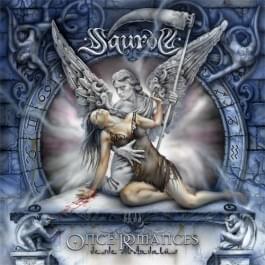
 View Artist