Song Meaning
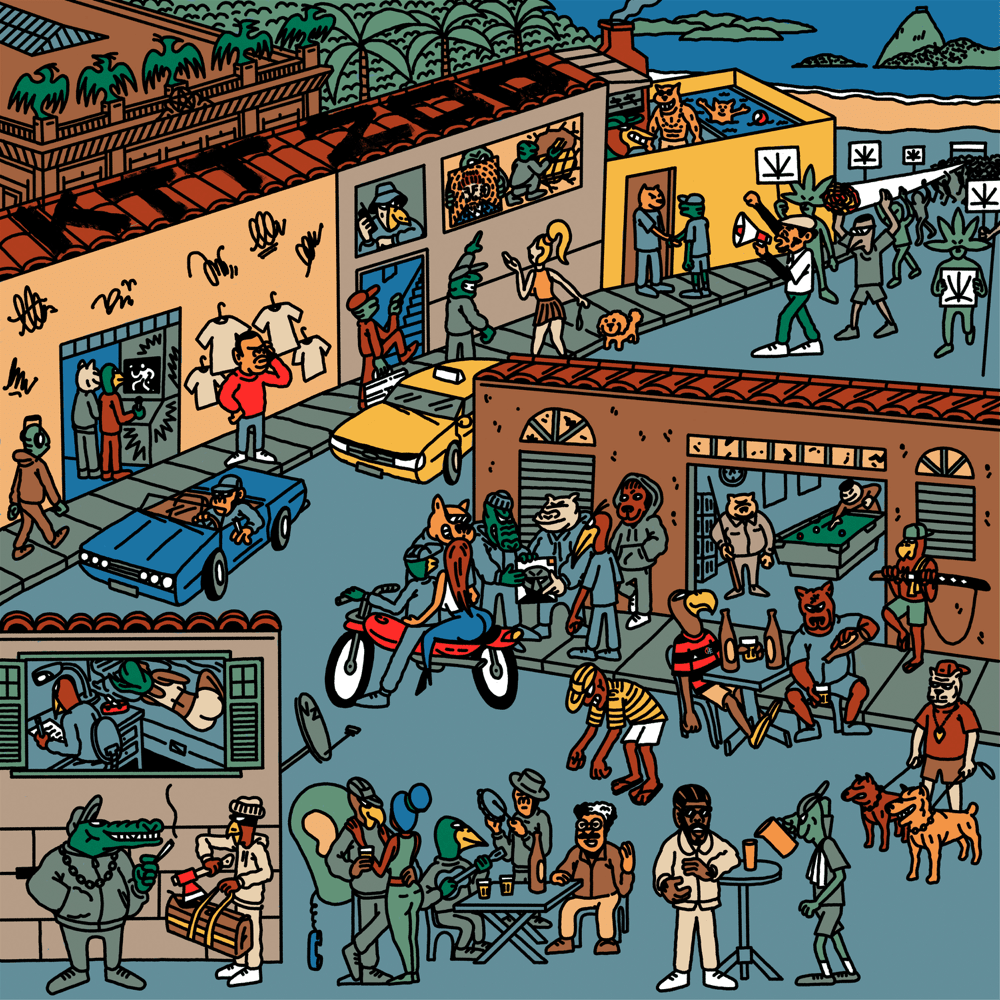
These lyrics paint a vivid picture of a crew navigating a world filled with both pleasure and peril. We see a "modelo na garupa" enjoying the thrill, alongside the casual act of lighting up "skunk só pra relaxar." Yet, this relaxed atmosphere is underscored by an ever-present awareness of enemies and the need for vigilance, creating a tense duality.
The central tension here lies in the stark contrast between outward appearances and underlying toughness. The speaker asserts, "Nós é bom, mas não é bombom," a sharp, colloquial way of saying they might seem approachable but are not to be trifled with. This idea extends to loyalty, where "vários amigos" appear during good times, but only those who have truly "correu comigo" will share in success, highlighting a deep-seated value for genuine camaraderie over superficial connections.
Perhaps the most striking craft element is the speaker's defiant declaration: "Não vim sobreviver, porra, eu tô elegante." This isn't just about getting by; it's about thriving with style and purpose, rejecting mere existence for something more. The powerful closing line, "Eu tô com o dedo no gatilho e tô ignorante," reclaims the word "ignorante" not as a lack of knowledge, but as an unbothered, aggressively confident readiness to act, dismissing external noise and focusing solely on their path.
Ultimately, these lyrics hit hard because they capture a specific blend of ambition, loyalty, and street-level pragmatism. The raw, direct language and vivid imagery create an authentic sense of a world where self-preservation and thriving go hand-in-hand, all while maintaining an unyielding, almost unapologetic stance against perceived threats. It's a declaration of self-possession in the face of constant challenge.