Song Meaning
{"song_id": 10888883, "meaning": "Ry Cooder's \"Police Dog Blues\" isn't just a lament; it's a study in displacement and the ever-present threat of authority, both personal and societal. The song meaning circles around a central figure – a \"travellin' man\" perpetually on the move, not out of desire, but necessity. This constant motion is not portrayed as freedom, but rather a defense mechanism against an unnamed pressure. He's shipping his \"trunk down to Tennessee,\" a symbolic act of trying to establish roots, yet admitting it's \"hard to tell 'bout a man like me,\" hinting at an internal instability or perhaps an external judgment that prevents him from settling. The blues, here, aren't just about romantic rejection, but about a deeper sense of not belonging.
The failed relationship, where his girl rejects him for his \"kind,\" acts as a catalyst. It's not just heartbreak; it's a reinforcement of his outsider status. The introduction of the \"police dog\" shifts the metaphor into something more menacing. It's no longer just about a lost love, but about the potential for violent enforcement of social norms. The dog, \"cravin' for a fight,\" represents the ever-present threat of being hunted, judged, and punished for not fitting in. The line about the dog leaving his mark on \"everybody's pants\" is a darkly humorous jab at the indiscriminate nature of power and the fear it instills.
Ultimately, the decision to \"travel, guess I'll let her be,\" isn't an act of liberation, but a surrender. The protagonist chooses the road—the life of a perpetual outsider—over confronting the forces aligned against him. It's a poignant commentary on the psychological toll of feeling marginalized and the lengths to which individuals will go to avoid conflict and potential harm. The \"Police Dog Blues\" becomes a quiet, yet powerful, observation about the forces that keep people on the margins, running from shadows both real and imagined."}
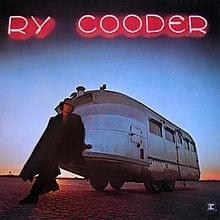
 View Artist