Song Meaning
The lyrics immediately invite a profound thought experiment: envisioning a world stripped of traditional divisions. It's a call to imagine a simpler existence, free from the concepts of afterlife, national borders, or religious dogma. The tone is direct and almost childlike in its simplicity, yet profoundly ambitious.
The central tension lies between the current reality, implicitly defined by the things being imagined away, and this idealized vision. The repeated "Imagine" isn't just a suggestion; it's an active challenge to dismantle deeply ingrained societal structures in one's mind. The lyrics suggest that human divisions—whether by belief ("no Heaven," "no religion too"), geography ("no countries"), or material desire ("no possessions")—are the root of conflict, leaving "Nothing to kill or die for."
The most striking craft element is the relentless use of anaphora with "Imagine" and the consistent negative constructions, like "no Heaven" or "no possessions." This repetitive structure builds a cumulative vision by systematically removing barriers, creating space for a new kind of unity. Phrases like "It's easy if you try" and "It isn't hard to do" act as gentle nudges, disarming the listener into considering radical ideas, though a subtle shift to "I wonder if you can" acknowledges the difficulty of imagining a world without personal property.
The effectiveness of these lyrics comes from their directness and radical simplicity. By stripping away complex systems, they reveal a core human desire for peace and shared existence. The narrator's self-identification as a "dreamer" softens the potentially confrontational message, transforming it into an invitation rather than a demand. The repeated plea, "I hope someday you'll join us," elevates the individual imagination into a collective aspiration, presenting a utopian vision as a series of achievable mental shifts leading to a world where "all the people" are "Living life in peace" and "Sharing all the world."
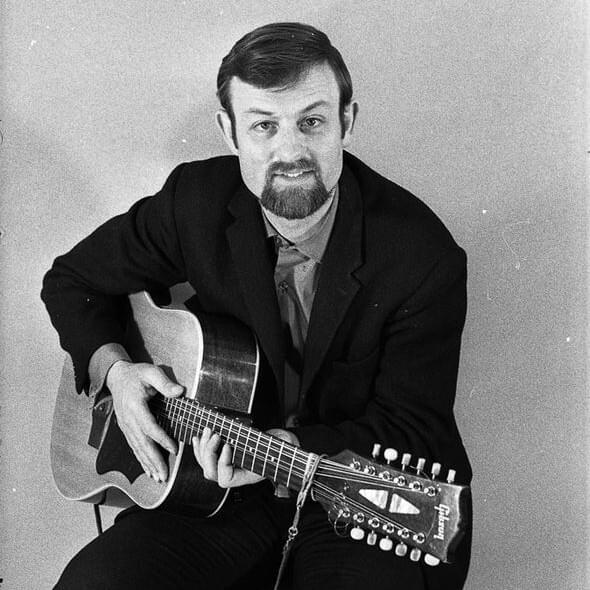
 View Artist