Song Meaning
Robert Goulet's rendition of "Thirty Days Hath September" transcends the simple calendar rhyme, becoming a syrupy declaration of devotion. Forget mnemonic devices; Goulet offers something far more potent: the complete surrender of temporal autonomy. Time, in this context, isn't a sequence of dates but a continuous offering, a blank check of availability written to the beloved. The schoolyard rhyme, usually a tool for rote memorization, is here repurposed as a foundation for a love that seeks to redefine the very nature of time itself. The song meaning pivots on the contrast between the mundane calendar and the overwhelming power of love.
Lyrically, the song doubles down on this theme of utter dedication. The lines "I don't have to refer / To the year's calendar" suggest a rejection of external constraints, a private world constructed solely around the relationship. This isn't just about romantic love; it hints at a deeper psychological need to cede control, to find solace in the arms of another. The repetition of the chorus reinforces the idea of time's irrelevance. Why bother with the specifics of months when every day is dedicated to the object of affection? It's a bold, if somewhat saccharine, statement of unwavering commitment.
Ultimately, "Thirty Days Hath September," in Goulet's capable hands, becomes an exploration of love as an all-consuming force. It's about finding freedom not in independence, but in the willing submission to another. The song resonates because it taps into a fundamental human desire: to be completely and utterly devoted, to lose oneself in the embrace of love, even if it means abandoning the structure and predictability of ordinary time. The listener is left to decide if this is a healthy expression of love or a slightly unsettling proposition.
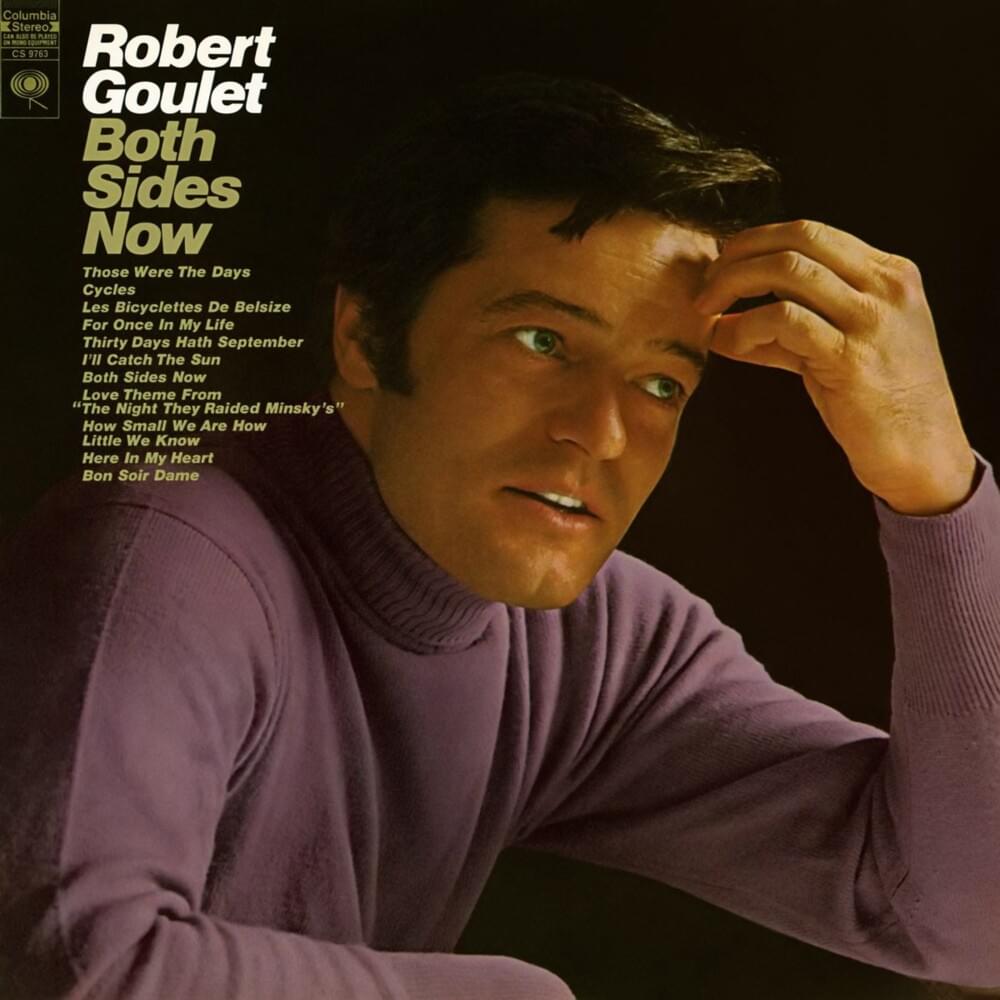
 View Artist