Song Meaning
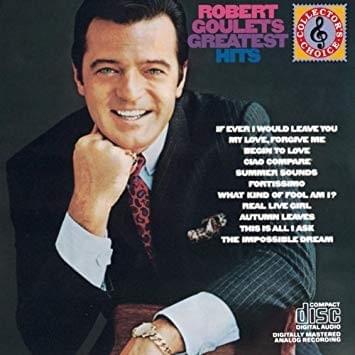
Robert Goulet's rendition of "The Impossible Dream" transcends a simple ballad; it's a psychological manifesto draped in orchestral grandeur. The song, beyond its surface accessibility, delves into the human need for purpose, the seductive danger of idealism, and the bittersweet solace found in unwavering commitment, even when faced with inevitable failure. Goulet, with his signature blend of theatricality and raw emotion, doesn't just sing the lyrics; he embodies the quixotic figure, the man tilting at windmills not because he expects to win, but because the striving itself is the victory. The core of the song's meaning resides not in achieving the impossible, but in *daring* to dream it. It acknowledges the inherent human condition of 'unbearable sorrow' and the prevalence of 'unrightable wrong,' positioning the pursuit of ideals as a coping mechanism, a way to impose order on a chaotic world. This taps into core psychological defense mechanisms; sublimation, where unacceptable impulses are transformed into socially acceptable actions, is on full display. The quest becomes an end in itself.
What makes "The Impossible Dream" resonate so deeply is its awareness of the cost. The lyrics don't shy away from acknowledging the scorn and the scars, the weariness and the hopelessness. This isn't naive optimism; it's a hardened, almost defiant hope that persists *despite* the overwhelming odds. The 'unreachable star' serves as a potent symbol, not of literal achievement, but of an aspirational target that organizes and gives meaning to a life otherwise adrift. The willingness to 'march into hell for a heavenly cause' speaks to a profound need for justification, a desire to believe that one's suffering has intrinsic value. This reflects the human inclination to seek meaning, as espoused by thinkers like Viktor Frankl, even in the face of extreme adversity.
Ultimately, the song meaning of “The Impossible Dream” rests on the promise of inner peace attained through unwavering dedication to a personal ideal. The lyrics suggest that a life lived in pursuit of such a quest, regardless of its ultimate outcome, will result in a tranquil heart at rest and a world made subtly better by the attempt. This offers a powerful counter-narrative to the cynicism of the modern age. Goulet's interpretation, therefore, isn't just a performance; it's an invitation to examine the impossible dreams we harbor within ourselves and to consider the transformative power of pursuing them, even if those dreams remain perpetually out of reach. The scars, then, become not marks of failure, but badges of honor, testaments to a life lived with purpose and courage.
 View Artist