Song Meaning
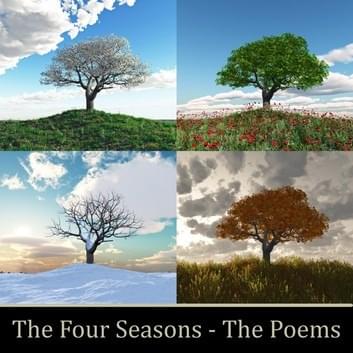
John Keats maps the human lifespan onto the cyclical rhythm of the year, presenting four distinct phases of mental and emotional experience. The poem opens with a direct parallel: the four seasons outside mirror the four seasons within the human mind. This establishes a framework for understanding personal growth and change as a natural, inevitable progression, much like the turning of the earth.
The poem details these internal seasons with vivid imagery. Spring is a time of boundless perception and youthful energy, where "fancy clear" readily absorbs beauty. Summer represents a period of contented, perhaps even lazy, reflection, where past experiences are "ruminate[d]" upon, bringing the mind "nearest unto heaven." Autumn signifies a turning inward, a time of quietude and acceptance, where the soul "furleth close" its wings, content to observe life pass by without active pursuit.
The final season, Winter, is depicted with a starker, more challenging tone. It is a state of "pale misfeature," suggesting a decline or a period of hardship. However, the poem concludes with a crucial insight: this winter phase is not an end but a necessary part of our mortal existence, implying that without these periods of difficulty or decay, we would "forego our mortal nature." This suggests that the full spectrum of human experience, including its less pleasant aspects, is essential to our humanity.
The effectiveness of these lyrics lies in their elegant, almost serene, articulation of a profound truth about human development. By likening internal states to external natural phenomena, Keats lends a sense of order and beauty to the often-turbulent passage of life. The poem’s quiet contemplation invites the reader to recognize these phases within themselves, finding a measure of peace in the natural unfolding of their own seasons.
 View Artist