Song Meaning
The lyrics paint a picture of an almost otherworldly woman, whose beauty is described as adjusting to a "starry height." She's presented as exclusive, expressive, and possessing an "untouchable" presence that captivates the narrator. This initial admiration focuses on her outward appearance and the way she seems to embody an ideal, making her seem "good" simply by existing in a way that pleases the observer. The narrator sees her as a carefully constructed entity, "made for your mind," living "in her act."
The central tension arises from the narrator's struggle to understand the source of this attraction. While the woman's outward presentation is clearly designed to be appealing, the narrator admits, "I don't know why" they are drawn to her. This disconnect between the woman's curated image and the narrator's inexplicable pull suggests a deeper, perhaps subconscious, recognition or desire that transcends superficial admiration. The lyrics hint that this woman is performing a role, and the narrator is captivated by the performance itself.
The most striking craft element is the repeated emphasis on non-verbal communication. The narrator notes, "she doesn't speak much / 'Cause her body talks," and later, "It's her face that talks." This focus on silent expression highlights the woman's enigmatic nature, suggesting her true essence or impact is conveyed through subtle cues rather than direct speech. The contrast between her silence and the powerful communication of her physical being creates a compelling, almost magnetic, aura around her.
Ultimately, the effectiveness of these lyrics lies in their portrayal of an idealized, almost manufactured, beauty that nonetheless sparks a genuine, albeit confusing, attraction. The narrator's admission of not knowing why they are drawn to her adds a layer of vulnerability and intrigue. The shift from admiring her to seeing her reflected in the narrator's own gaze, culminating in the repeated phrase "Looks good on you," suggests a projection of this captivating quality onto the narrator themselves, blurring the lines between observer and observed.
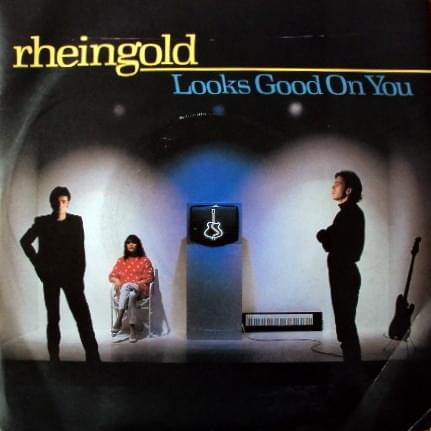
 View Artist