Song Meaning
The lyrics paint a stark portrait of a relationship teetering on the edge, characterized by a stark contrast between the narrator's "bianco" (white) lover and their own "nera" (black) self. The "bianco" figure is described with a "viso bianco" (white face) and "sguardo stanco" (tired gaze) that "non s'accende più" (no longer lights up), suggesting a profound emotional depletion or detachment. The narrator, in turn, feels a similar fading, asking "Quanto ti manco?" (How much do you miss me?) before stating "Ora mi spengo" (Now I turn myself off), mirroring the lover's weariness.
The central tension arises from this shared but asymmetrical exhaustion and the narrator's conditional affection, expressed as "Mi piaci ma a metà" (I like you, but only halfway). This "halfway" feeling is amplified by the looming sense of an inevitable end: "Fra un po' una fine avrà, lo sai" (Soon it will have an end, you know). The repeated "Du! Du! Da!" interjections, almost like a playful but hollow refrain, underscore the superficiality or the desperate attempt to maintain some semblance of connection amidst the decay.
A striking shift occurs with the introduction of the "nera" persona. The narrator declares, "Ho la faccia nera / Di una bambola nera / Nera come l'atmosfera" (I have a black face / Like a black doll / Black like the atmosphere). This imagery suggests a darkening, perhaps a resignation or a transformation into something perceived as undesirable or ominous. The subsequent lines, "Attento al raid della polizia / Sospetto! Scappa via! / E sporcati la faccia... / Bianca..." (Watch out for the police raid / Suspicious! Run away! / And dirty your face... / White...), introduce an element of danger and deception, where the narrator urges the "bianco" figure to conceal their true state, perhaps by adopting a darker appearance or by fleeing, implying they are in trouble and must hide their true nature or circumstances.
The effectiveness of these lyrics lies in their stark, almost brutal, visual contrasts and the raw emotional honesty of conditional love and impending loss. The simple, repeated phrases and the stark color imagery create a powerful, almost primal, sense of separation and decay. The narrator's oscillation between "Mi piaci ma a metà" and "Ti amo ma a metà" (I love you, but only halfway) captures the painful reality of a relationship that is neither fully present nor entirely gone, leaving the listener with a potent sense of unresolved melancholy and the chilling inevitability of the "fine" (end).
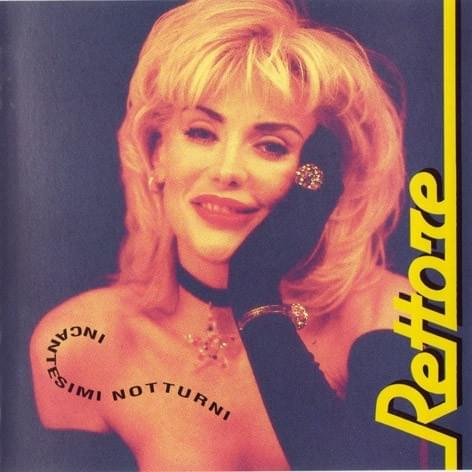
 View Artist