Song Meaning
The lyrics paint a picture of a strained relationship where direct communication about love feels difficult, if not impossible. The repeated question, "Sä kysyt rakastatko mua vielä" (You ask if I still love you), immediately sets a tone of doubt and uncertainty. The narrator admits it would be "helppo sanoo rakastan" (easy to say I love you), but immediately qualifies it with "Joskus niin paljon, joskus en tiedä" (Sometimes so much, sometimes I don't know). This contrast highlights a disconnect between the ease of uttering the words and the complex, perhaps absent, reality of the feeling. Physical intimacy is also described as diminished, with kisses lacking their former feeling and touches becoming fleeting, suggesting a growing distance.
The central tension lies in the stark difference between the messy, uncertain reality of the relationship and the idealized, effortless version of love found in songs. The phrase "Laulussa on helppo rakastaa" (In a song, it's easy to love) becomes a refrain that underscores this divide. The lyrics suggest that in the world of music, love is uncomplicated: wanderers return home, women wait, and men don't die in hatred. These are romanticized scenarios where love's complexities are smoothed over, offering an escape from the narrator's own faltering connection. The song becomes a space where these idealized versions of love can exist, even if they don't reflect the narrator's lived experience.
The most striking aspect of the craft is the consistent juxtaposition of the personal, hesitant present with the grand, simplified narratives of song. The lyrics use song as a metaphor for an unattainable ideal of love – one that is always true, always sufficient, and always easy. The narrator's admission that "Niin paljon elämää laulussa on totta / Vähän sanoja, paljon asiaa" (So much of life in song is true / Few words, much substance) is particularly poignant. It implies that songs capture an essence or a truth about love that the narrator struggles to express or feel in their own life. The ability to ask for whisky or forget troubles in song, without the harsh realities of needing money for food, further emphasizes how songs offer a frictionless, idealized existence.
Ultimately, these lyrics resonate because they articulate a common human experience: the gap between our desires and our realities, and the comfort we find in idealized narratives, especially through art. The narrator isn't necessarily lying when they say "Sanon laulussa on helppo rakastaa" (I say in a song it's easy to love); they are expressing a longing for that ease, a place where love is as straightforward and potent as a melody. The song acknowledges the difficulty of real-world love while finding solace and expression in the perfect, uncomplicated love that music can provide.
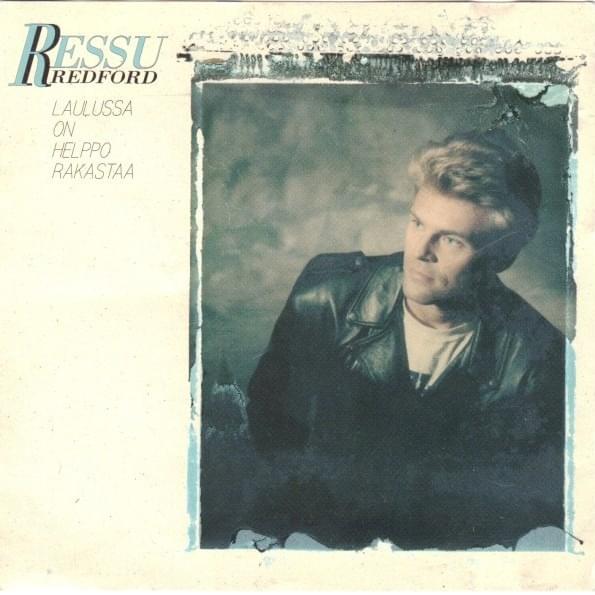
 View Artist