Song Meaning
The lyrics paint a picture of a decadent, almost mythical elite observed from a distance, contrasted with a personal, defiant call to action. Initially, the narrator seems to be watching "monarchs and their figurines" in the back of luxury cars, described as "demigods" who "make little ones" and "make the envious." This sets a scene of detached observation and perhaps a touch of resentment towards a privileged, self-contained world. The narrator then claims a different kind of sovereignty: "I am the king of the scoundrels / To whom life smiles," positioning themselves outside the established hierarchy, living by their own rules.
The core tension emerges between this passive observation of a detached elite and an active, almost rebellious embrace of life's pleasures and freedoms. The narrator desires to "walk on water," "avoid tolls," and "never suffer," aiming for a life of uninhibited enjoyment, symbolized by making "the horses of pleasure neigh." This isn't about achieving the status of the observed elite, but about a personal liberation, a rejection of constraints and suffering in favor of pure, unadulterated experience.
The repeated imperative, "Osez, osez Joséphine," acts as a powerful incantation, urging a bold embrace of life, particularly as night falls and justifications fade. The phrase "Plus rien ne s'oppose à la nuit" suggests a surrender to the moment, where external rules and reasons become irrelevant. The subsequent line, "Rien ne justifie," reinforces this idea of living without needing external validation or explanation, a radical act of self-determination. The call to "wear out your shoes" and "wear out the usurer" further emphasizes an active, perhaps even destructive, engagement with the world, consuming experiences and defying financial or societal pressures.
This lyrical construction is effective because it juxtaposes the passive, almost voyeuristic gaze at a distant, unattainable world with an urgent, personal plea for radical self-expression and pleasure. The repetition of "Osez, osez Joséphine" transforms from a simple command into an anthem for living fully, especially when conventional justifications dissolve. The lyrics resonate by offering an escape from societal expectations and a permission to pursue joy, even if it means living outside the lines, driven by an internal imperative rather than external validation.
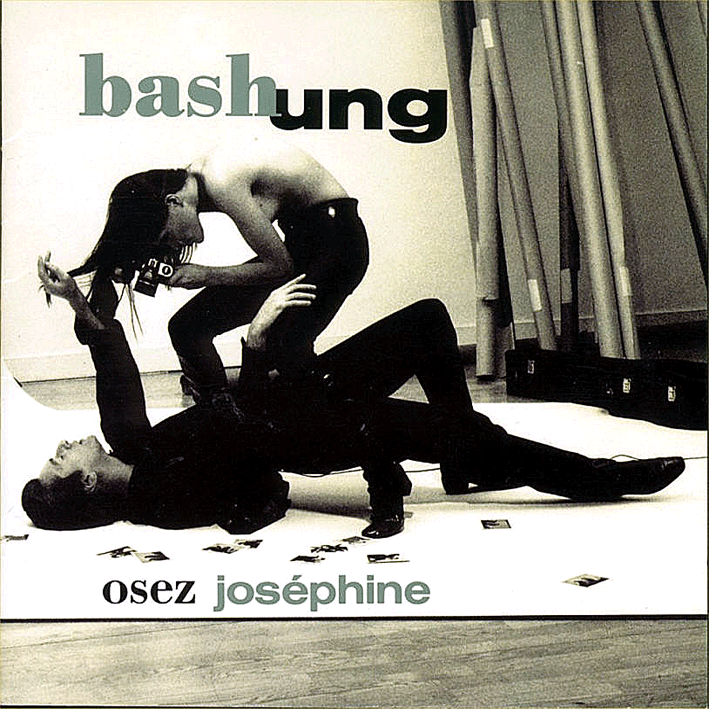
 View Artist