Song Meaning
The lyrics present a stark, almost conditional definition of love and self-love. The opening lines, "Si tu ne m'aimes pas, tu ne t'aimes pas" and its direct inversion, establish a powerful, intertwined connection between loving another and loving oneself. This isn't a gentle suggestion; it's a declarative statement that frames the absence of love for the self as the direct cause or equivalent of not loving the speaker. The repetition hammers this point home, suggesting a fundamental, inescapable truth the narrator believes.
The central tension lies in this absolute equation. It implies that if the beloved doesn't reciprocate love, it's not just a personal failing towards the speaker, but a deeper, internal deficit within them. The narrator seems to be projecting a requirement onto the other person, where their own self-worth is validated or invalidated by their capacity to love the speaker. This creates a fragile, demanding dynamic, where the speaker's perception of the other's self-love is directly tied to their own emotional state.
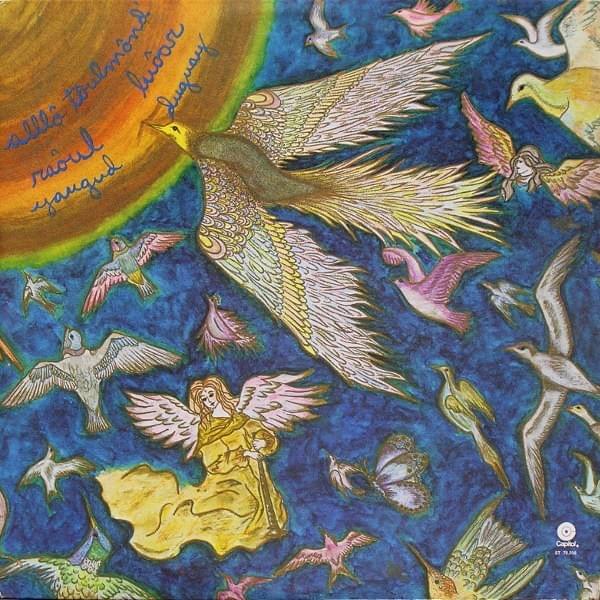
The imagery used to describe love is striking in its contrasts. Love is likened to "un soleil" (a sun), a powerful, life-giving force, yet it's also placed "Dans la nuit de toulmonde" (in the night of Toulmonde), suggesting it shines even in darkness or amidst a general lack of light. More paradoxically, love is "Comme un flocon de neige dans la neige" (like a snowflake in the snow) and "dans le soleil" (in the sun). The first evokes a sense of belonging, being one among many, while the second suggests a fragile, perhaps melting, existence against a powerful, overwhelming force. These juxtapositions highlight the complex, sometimes contradictory nature of love as perceived by the narrator.
Ultimately, the effectiveness of these lyrics stems from their bold, almost accusatory framing of love and self-love. The direct, unadorned pronouncements create an immediate emotional impact, forcing the listener to consider the speaker's intense, perhaps insecure, perspective. The lyrical construction suggests that for the narrator, love is not a gentle offering but a fundamental test of character, a condition that reveals one's deepest truths about self-worth.
 View Artist