Song Meaning
The lyrics immediately confront the listener with a stark, almost musical definition of malevolence. "Evil has its own beats per minute" suggests a pervasive, rhythmic force. This isn't just a concept; it's an active, pulsating presence.
The tension arises from giving something as abstract as "Evil" a precise, technical measurement like "beats per minute." This unexpected pairing makes the concept feel disturbingly tangible, implying that malevolence operates with its own internal, relentless rhythm. It's a chilling thought: evil isn't chaotic, but methodical.
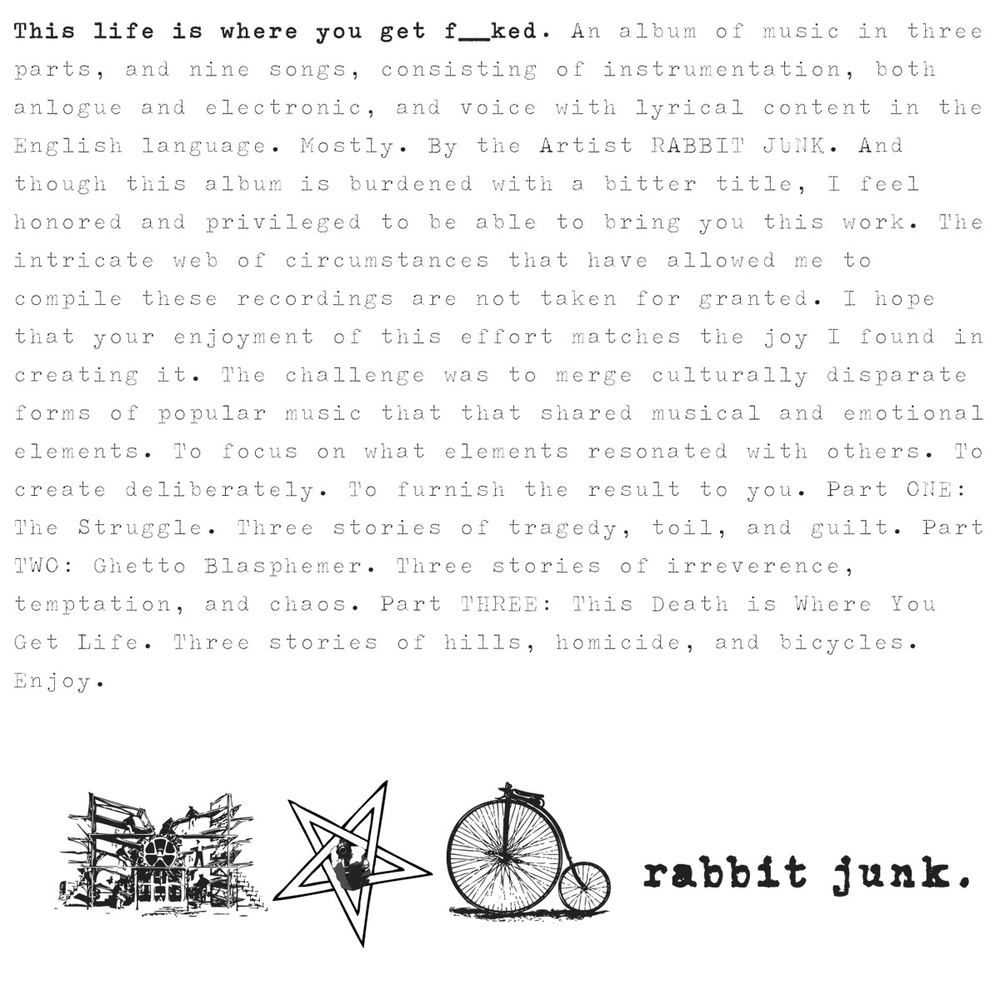
The second line, "It's the Ghetto Blasphemer," then sharpens this abstract idea into a specific, provocative identity. "Ghetto" grounds the evil in a particular social context, perhaps suggesting a marginalized origin or a critique of societal perceptions. "Blasphemer" adds a layer of defiance, implying a challenge to established norms or sacred beliefs, making this evil not just destructive, but also rebellious.
These brief lines are effective because they fuse the abstract with the concrete, creating a vivid and unsettling image. By assigning "its own beats per minute" to evil and then personifying it as a "Ghetto Blasphemer," the lyrics transform a vague idea into a character with a pulse and a purpose. It forces the listener to consider the specific, rhythmic nature of certain forms of defiance and perceived malevolence.
 View Artist