Song Meaning
These lyrics open with a stark portrayal of financial hardship, tracing a father's early retirement to a mother's new part-time job and a sibling's insurance needs. The narrator reflects on their "eye-rice" – a potent image of feeling like a burden, questioning who truly benefits from their perceived drain on resources. This immediate sense of familial struggle sets a heavy, anxious tone.
The narrative then pivots to a grandmother's funeral, a rare family gathering that brings a deeply resonant moment: the father's declaration, "I am now an orphan." This unexpected statement of profound loss, coming from an adult, seems to galvanize the narrator. It's in response to this raw vulnerability that the narrator embraces their identity, asserting, "what am I if not an artist?" and describing their ability to observe and write as a "curse."
This "curse" of seeing and documenting reality becomes the foundation for a defiant ambition. The narrator cleverly plays on the Korean words "영세" (poor/small) and "영생" (eternal life), declaring a rejection of the former to pursue the latter through their art. This shift from observing the struggles of "poor rappers" to claiming a path of "eternal life" through their own time-infused songs marks a powerful turning point.
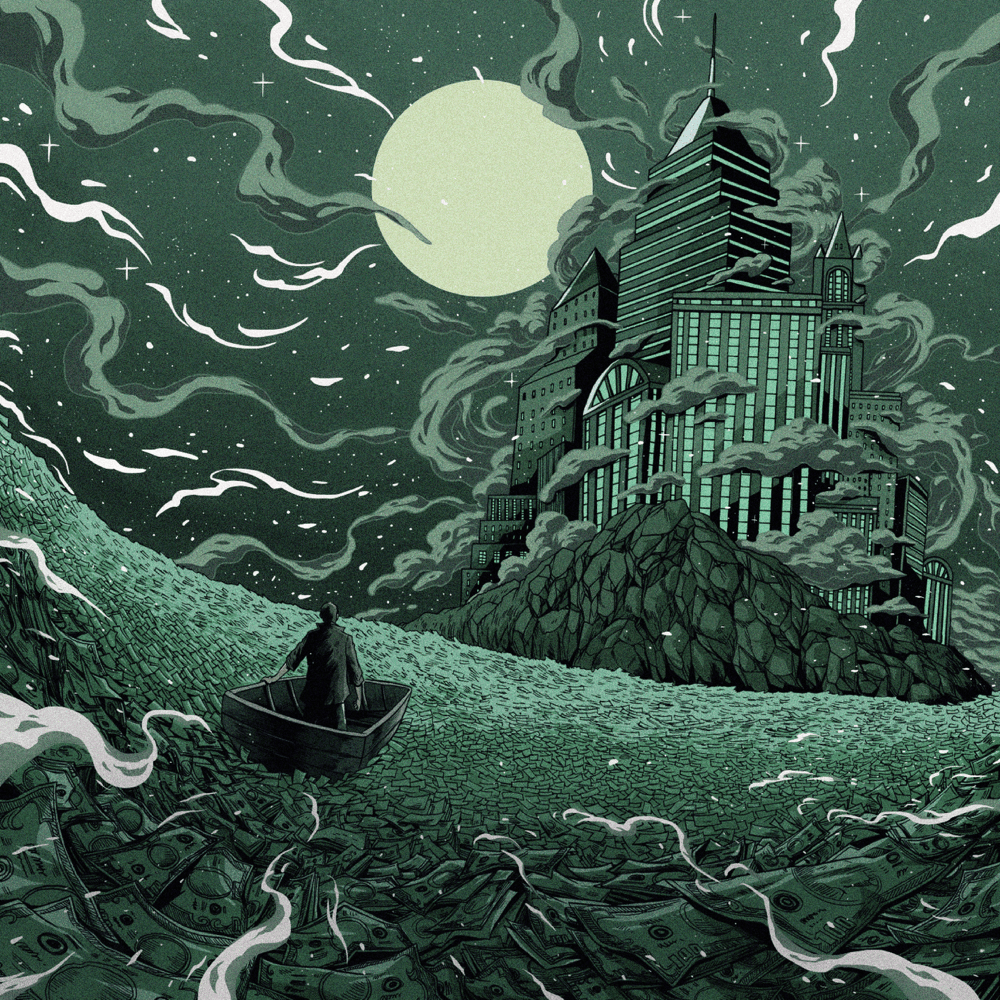
The lyrics culminate in a bold aspiration, referencing Gatsby's pursuit of wealth and a "big score." Yet, this ambition is complex, hinted at by the image of a "silver chain discolored by my poison." The narrator appears to acknowledge that their drive, perhaps born from hardship and a need to escape, might carry a corrupting element. It's a striking admission, suggesting that the pursuit of success, even if it brings a desired escape from financial precarity, comes with its own unique cost.
 View Artist