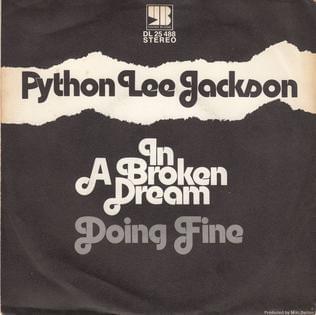
Song Meaning
The narrator describes a state of passive waiting, caught in a loop of daily routine and a vague sense of unease. The chorus paints a picture of someone "drinkin' wine, feelin' fine" while simultaneously "waitin' here to find the sign / That I can understand." This creates an immediate tension between a forced contentment and an underlying search for meaning or resolution. The repetition of "every day" emphasizes the cyclical nature of this existence, suggesting a lack of progress or genuine change.
The core conflict seems to be between a desire for clarity and an acceptance of ambiguity, perhaps even a resignation to it. The phrase "I don't care if I ever know" directly confronts this, yet the persistent waiting for a "sign" indicates a lingering hope or need for understanding. This internal push-and-pull is further complicated by the unsettling imagery of "ivory towers, bloody flowers," which juxtaposes idealized structures with violent, organic growth, hinting at a world where beauty and decay are intertwined.
The lyrics employ stark contrasts to highlight this fractured reality. The seemingly idyllic "ivory towers" are immediately undercut by "bloody flowers," suggesting that even in places of supposed purity or power, there's an inherent corruption or pain. Similarly, the idea that "your wounds won't leave a scar" implies a superficiality to suffering, or perhaps a numbness that prevents true healing. This is reinforced by the image of "paper cries, tellin' lies," where written words, meant to convey truth or promises, are instead instruments of deception.
Ultimately, the effectiveness of these lyrics lies in their ability to capture a specific kind of existential ennui. The narrator is not actively suffering but is instead suspended in a "broken dream," a state of unreality where outward appearances of well-being mask an internal void. The fragmented imagery and the resigned yet expectant tone create a potent atmosphere of melancholy and unresolved longing, making the listener question the nature of their own perceived contentment.