Song Meaning
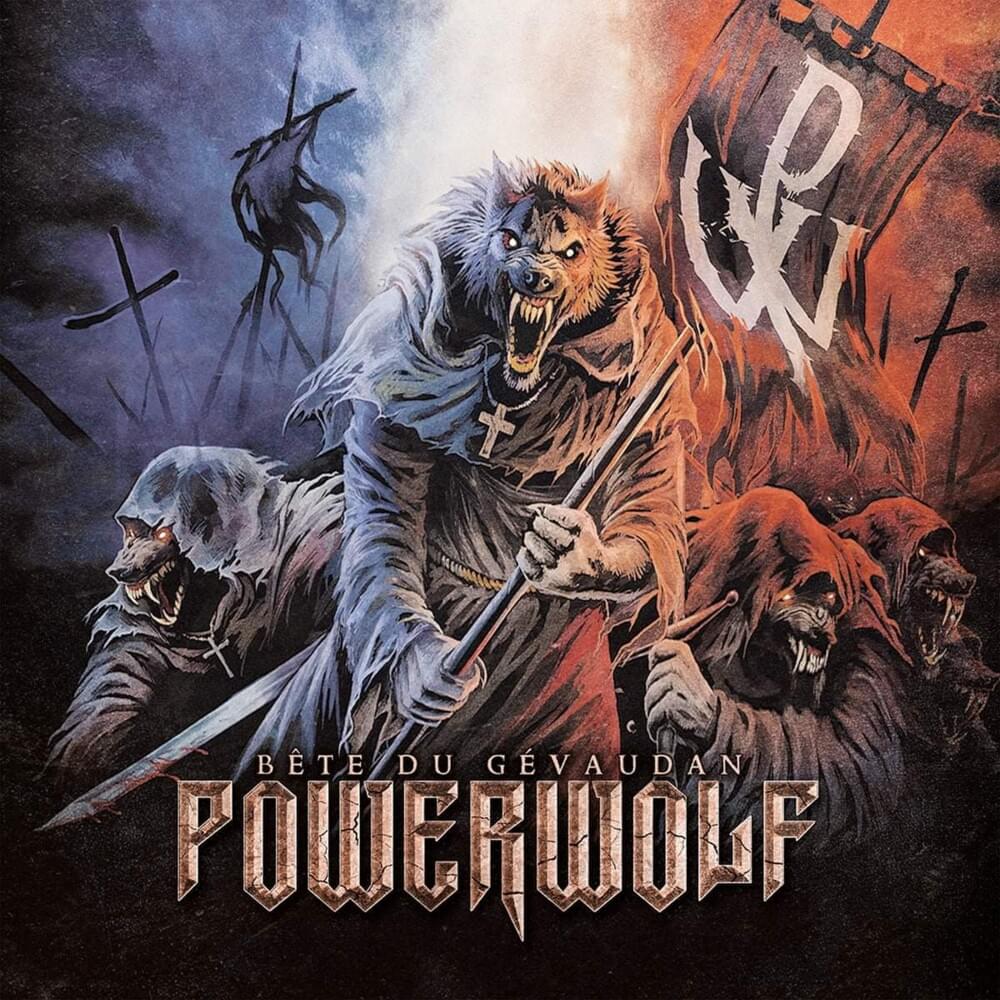
The lyrics paint a chilling portrait of the Beast of Gévaudan, not just as a monster, but as a paradoxical force of nature. It arrives for everyone, "l'impie et l'innocent," the wicked and the innocent alike, suggesting an indiscriminate, almost cosmic judgment. This entity is described as an "exécuteur, un tueur," an executioner and killer, blurring the lines between natural predator and something more deliberate, more mechanical. The repeated phrase "Vint la Bête du Gévaudan" hammers home its inevitable arrival, a recurring dread.
The central tension lies in the Beast's dual nature. It's presented as "mi-loup et mi-machine," half-wolf, half-machine, a terrifying fusion of the primal and the artificial. This isn't just a wild animal; it's something engineered or fated to kill. Further complicating this is the description of it as "un rédempteur, un croyant qui saigne et assassine," a redeemer, a believer who bleeds and assassinates. This oxymoron is striking, suggesting a twisted divine purpose or a faith that manifests through brutal violence.
The most compelling aspect of the writing is its stark, almost liturgical repetition. The same lines are delivered multiple times, creating a sense of inescapable fate and building a ritualistic atmosphere. The contrast between the sacred figures it targets – "le prieur et l'enfant" – and the violent actions of the Beast underscores the sacrilege and the profound disruption it brings. The lyrics don't offer comfort; they present a relentless, terrifying inevitability.
This lyrical construction is effective because it bypasses simple horror and taps into a deeper, more existential dread. By presenting the Beast as a complex, contradictory entity rather than a straightforward monster, the lyrics evoke a sense of awe and terror. The relentless structure and the stark imagery create a feeling of being overwhelmed by forces beyond comprehension, making the Beast a potent symbol of destructive power.
 View Artist