Song Meaning
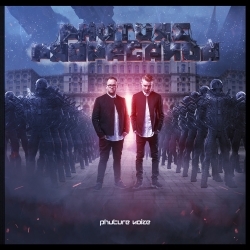
The lyrics paint a picture of surrender, a willing descent into a state of being controlled. The opening lines invite the listener to "close your eyes and drift away," immediately establishing a tone of passive acceptance. This isn't a forceful abduction, but a gentle, almost seductive, "be led astray." The imagery of "floating along and obeying commands" suggests a loss of agency, where the mind willingly "gives in to the worlds errands." It’s a deliberate relinquishing of control, framed as a natural progression.
This descent into obedience is then juxtaposed with a grand, almost philosophical, inquiry into human desire. The narrator poses a question about the single, universal longing that drives humanity, a force so potent it has fueled wars and inspired "millions have died for it." This desire is presented as the ultimate unifier, capable of bringing "all of humanity under a common cause." The lyrics suggest this powerful, unifying force is paradoxically strengthened by its absence, becoming more potent the more it is lost.
The craft here lies in the stark contrast between the intimate, almost hypnotic, command to surrender personal will and the sweeping, epic scope of the universal desire being discussed. The shift from the personal "your mind gives in" to the collective "all of humanity" is jarring. It implies that perhaps this universal desire, this grand cause, is what leads individuals to relinquish their own minds in the first place. The cyclical nature of the desire, growing stronger as it's lost, hints at an unending pursuit, a fundamental human condition.
What makes these lyrics resonate is the unsettling implication that our most profound, unifying desires might be intrinsically linked to a loss of individual self. The writing suggests that the very things we fight and die for, the ideas that bind us, might also be the mechanisms by which we are led astray, hypnotized into a collective pursuit. It’s a commentary on the powerful, often invisible, forces that shape human action and belief.
 View Artist