Song Meaning
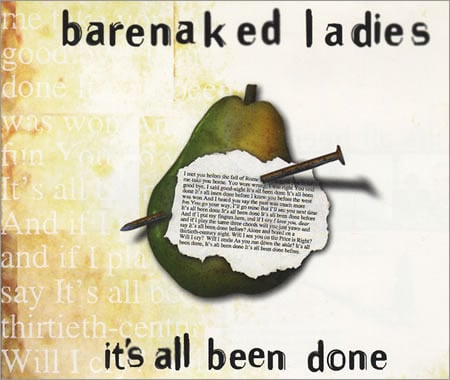
The lyrics paint a picture of a relationship that feels ancient and endlessly repetitive. The narrator claims to have met their partner "before the fall of Rome" and "before the west was won," immediately establishing a sense of immense history and perhaps a weary familiarity. This isn't just a long relationship; it's one that feels like it spans epochs, suggesting a deep, almost fated connection that has played out countless times before. The initial interaction is framed by a disagreement: "You were wrong, I was right," followed by a starkly different parting: "You said goodbye, I said goodnight." This contrast hints at underlying friction and a communication breakdown that has become a recurring theme.
The central tension here is the feeling of inevitability and stagnation, powerfully captured by the repeated chorus, "It's all been done." This refrain acts as a resigned mantra, suggesting that every action, every emotion, every potential future has already been experienced. The narrator seems to anticipate the partner's desire for the past, noting, "I heard you say the past was much more fun." This implies a shared dissatisfaction with the present and a longing for something that, according to the song's premise, has also already been done. The line "You go your way, I go mine / But I'll see you next time" reinforces this cyclical, inescapable pattern of separation and reunion.
The bridge offers a particularly sharp glimpse into the narrator's cynical outlook on romantic gestures. They question the efficacy of familiar expressions of affection, like saying "I love you, dear," or playing predictable music, asking, "Will you just yawn and say, 'Ah, I hate it'?" This suggests a fear that even sincere attempts at connection are doomed to be met with boredom or rejection, simply because "it's all been done." The final verse, set on a "thirtieth-century night," further amplifies this sense of future repetition, with the narrator wondering about mundane future encounters like seeing someone on "The Price Is Right." The emotional ambiguity of "Will I cry, will I smile" underscores the feeling that even emotional responses have become predictable and worn out.
Ultimately, the effectiveness of these lyrics lies in their audacious hyperbole and the bleak, yet strangely compelling, worldview they present. By stretching the timeline of the relationship to encompass ancient history and distant futures, the song elevates a personal conflict into a cosmic, existential weariness. The relentless repetition of the chorus, coupled with the specific, almost absurd historical and futuristic references, creates a powerful sense of déjà vu. It's this craft—the grand scale, the resigned tone, and the specific, yet exaggerated, details—that makes the listener feel the weight of endless repetition, questioning whether any new experience is truly possible.
 View Artist