Song Meaning
The lyrics open with a stark declaration of singular importance: "I am my mother's only one." This sets a tone of intense, perhaps isolating, connection. The narrator seems to be asserting a unique identity, yet the phrase "It's enough" carries a double edge, hinting at both self-sufficiency and a potential burden. The subsequent line, "I wear my garment so it shows / Now you know," suggests a deliberate display of this singular status, a need for external acknowledgment of their unique position.
The central imagery revolves around a "flume," a channel for water, where "gluey feathers" are stuck. This creates a vivid picture of being trapped or hindered, especially when paired with the recurring phrase "Only love is all maroon." Maroon, a deep, dark red, evokes a sense of intensity, perhaps passion or even blood, but its association with "gluey feathers" and a "flume" suggests that this love is sticky, difficult to navigate, and potentially suffocating. The "sky is womb and she's the moon" further complicates this, positioning a maternal, nurturing force (the sky/womb) in relation to a distant, perhaps unattainable, feminine presence (the moon).
The narrator's identity seems to merge with their mother's, stating, "I am my mother on the wall / With us all." This suggests a complex relationship where the narrator sees themselves reflected in or even subsumed by their maternal figure. The movement "in water, shore to shore" implies a continuous, perhaps aimless, journey, while "Nothing's more" reinforces a sense of finality or perhaps resignation to this state. The repetition of "Lapping lakes like leery loons" and "Leaving rope burns, reddish ruse" adds layers of unease, hinting at deceptive appearances and painful experiences masked by the intense "maroon" of love.
Ultimately, these lyrics craft a portrait of a deeply intertwined, possibly suffocating, maternal bond. The "maroon" love is presented as both the sole emotional color and a source of sticky, painful entanglement. The narrator's assertion of being their mother's "only one" and seeing themselves as their mother "on the wall" suggests a struggle for individual identity within a powerful, inherited emotional landscape, where love itself feels like a trap.
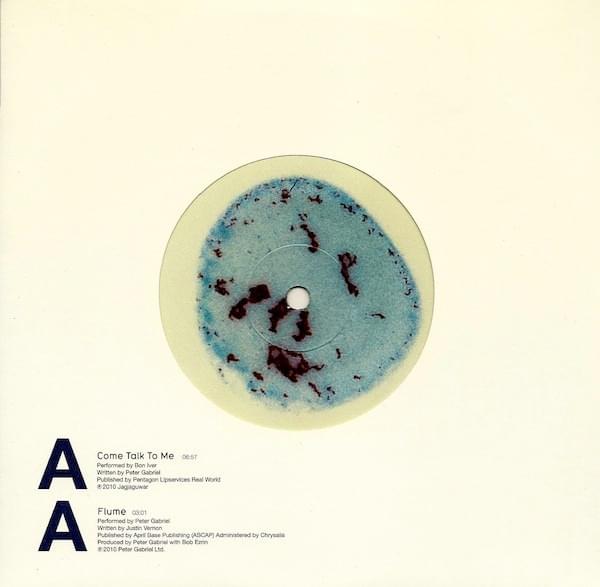
 View Artist