Song Meaning
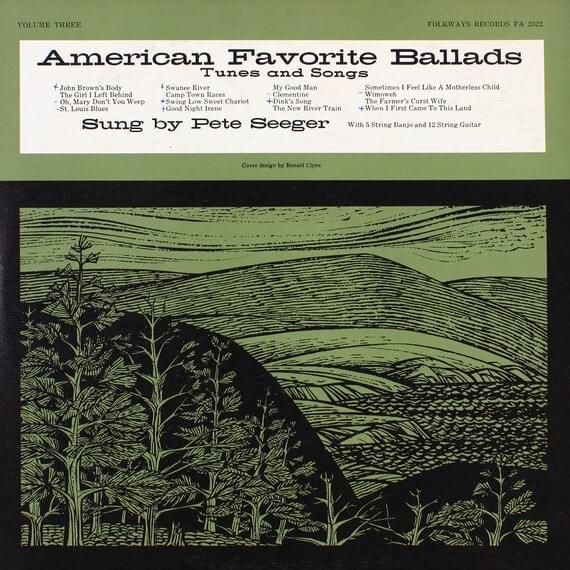
Pete Seeger's rendition of "Swanee River," also known as "Old Folks at Home," acts as a cultural artifact, a sonic time capsule that invites both appreciation and critical reflection. The song, draped in the gauzy nostalgia of the antebellum South, immediately presents a complex emotional landscape. The longing for 'the old folks at home' and 'the old plantation' evokes a powerful sense of place and belonging, yet this yearning is inextricably linked to a history of racial oppression. The lyrics, with their antiquated language and imagery, paint a picture of idyllic rural life, a paradise seemingly lost to the singer's wanderings. However, the phrase 'darkies' in the chorus cannot be ignored, immediately signaling the song's deep roots in minstrelsy and its problematic depiction of African Americans. Seeger's choice to perform the song, even with alterations in some versions, raises questions about the role of folk music in preserving and reinterpreting potentially offensive historical narratives.
Psychologically, the song taps into primal desires for comfort, security, and connection to family and heritage. The repeated chorus emphasizes the feeling of displacement and the yearning for a simpler, more innocent past. The singer's memories of playing with his brother and wandering around the farm evoke a sense of carefree joy, further intensifying the pain of separation. The desire to return to his 'kind old mother' speaks to a fundamental human need for maternal love and acceptance, suggesting a desire to return to a state of childlike dependence and security. The imagery of 'bees a-humming' and 'banjo strumming' creates an auditory landscape of warmth and familiarity, reinforcing the emotional pull of home. However, this idealized vision clashes starkly with the realities of slavery and racial injustice that underpinned the plantation system, creating a dissonance that challenges listeners to confront the song's inherent contradictions.
Ultimately, the song meaning of "Swanee River" transcends simple nostalgia, becoming a meditation on the complexities of memory, identity, and the burden of history. It invites us to consider how we grapple with the past, particularly when it is intertwined with pain and injustice. The song’s enduring popularity, despite its problematic origins, suggests a deep-seated human need to connect with a sense of home, even when that home is built on shaky foundations. Seeger's interpretation, viewed through a modern lens, serves as a reminder of the power of music to both perpetuate and challenge cultural narratives, forcing us to confront the uncomfortable truths embedded within our shared heritage. A nuanced lyrics analysis reveals that it is an exploration of longing, but also a stark reminder of the problematic narratives that shaped American identity.
 View Artist