Song Meaning
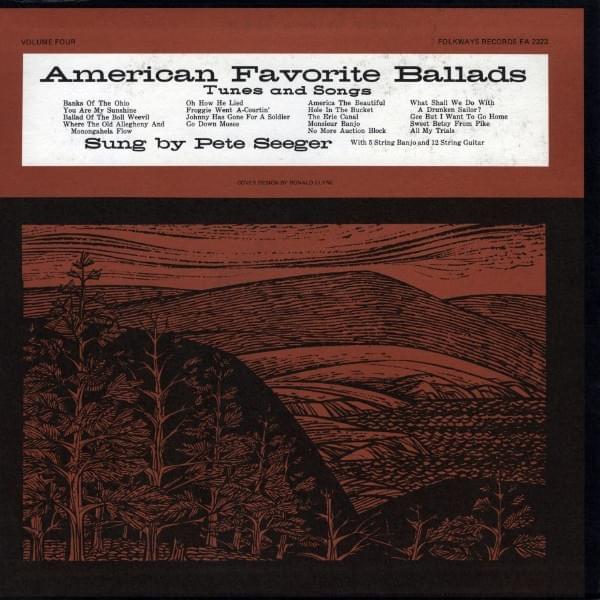
{"song_id": 14431369, "meaning": "Pete Seeger's rendition of \"Johnny Has Gone for a Soldier\" isn't just a folk song; it's a distilled portrait of grief and the quiet desperation war leaves in its wake. The simplicity of the melody, combined with the starkness of the lyrics, creates an atmosphere of profound loss. The song, at its core, explores the psychological impact of war on those left behind, specifically focusing on a woman grappling with the absence—and potential death—of her beloved Johnny. The opening lines, \"Here I sit on Buttermilk Hill / Here I sit and cry my fill,\" establish a scene of solitary mourning. The image of tears potent enough to \"turn a mill\" isn't merely hyperbolic; it’s a testament to the overwhelming emotional burden she carries. This isn’t just sadness; it’s a grief so potent it threatens to consume her. The repetition of \"Johnny has gone for a soldier\" acts as a haunting refrain, a constant reminder of her changed reality.
The inclusion of the Gaelic phrase \"Siul siul siul a gra\" adds another layer of depth. While its exact meaning might be debated, the general sentiment is one of lament or longing. This interjection suggests a cultural context steeped in tradition and a history marked by both love and sorrow. It's a window into a world where such partings were commonplace, where young men were routinely sent off to fight, leaving behind heartbroken women. The lyrics \"I'll sell my rod, I'll sell my reel / To buy my love a sword and shield\" speak to a willingness to sacrifice everything for Johnny's safety, highlighting the depth of her love and devotion. This selflessness is sharply contrasted by the devastating line, \"But now he lays murdered on the field,\" which shatters any lingering hope and confirms her worst fears.
Ultimately, the song's power lies in its raw emotional honesty. There are no grand pronouncements or patriotic sentiments, only the quiet, enduring pain of a woman who has lost everything. The song meaning transcends any specific conflict; it is a universal statement on the devastating consequences of war, focusing on the individual stories of those who are left to pick up the pieces. The final repetition of the refrain emphasizes the cyclical nature of grief, the way loss continues to resonate long after the initial trauma. \"Johnny Has Gone for a Soldier,\" as interpreted by Seeger, is a poignant meditation on love, loss, and the enduring human cost of conflict."}
 View Artist