Song Meaning
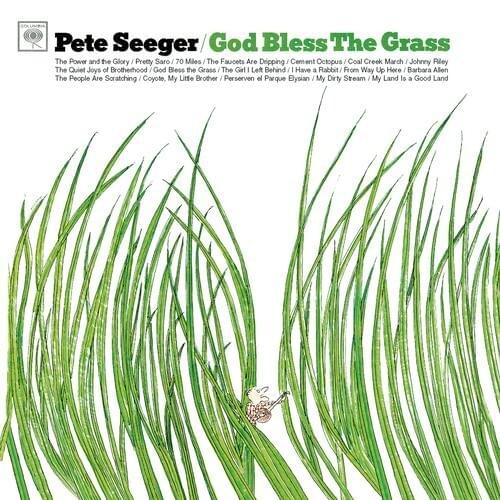
{"song_id": 14429564, "meaning": "On the surface, Pete Seeger's \"I Have a Rabbit\" seems a simple children's song, a counting rhyme set to a folksy tune. But scratch beneath the surface of this seemingly innocent ditty, and a darker commentary on unchecked growth and its consequences emerges. It begins with the childlike wonder of acquisition: \"I have a rabbit his eyes are blue / If I had another, then I'd have two.\" The \"La di dum la di dum day\" refrain reinforces the lightheartedness, masking the underlying theme of exponential increase.
As the song progresses, the initial joy of ownership morphs into a sense of being overwhelmed. The numbers escalate rapidly – from one rabbit to two, then ten, thirteen, forty, and finally a staggering six hundred. This relentless accumulation mirrors societal tendencies towards consumerism and the unsustainable pursuit of 'more.' The increasing variety of colors (\"brown, black, grey, and white and all kinds of colors\") hints at a loss of control, a chaotic proliferation that defies easy categorization or management.
By the final verse, the tone shifts from innocent pleasure to a subtle anxiety: \"I've got six-hundred rabbits, what will I do?\" This isn't just about rabbits anymore; it's a metaphor for any resource, any desire, any population that spirals beyond our capacity to manage it. The offer to \"bring down the price\" suggests a desperate attempt to offload the surplus, a recognition that unchecked growth inevitably leads to devaluation and, potentially, collapse. Seeger, known for his politically charged folk songs, subtly plants a seed of awareness about the potential pitfalls of unbridled expansion within a deceptively simple framework."}
 View Artist