Song Meaning
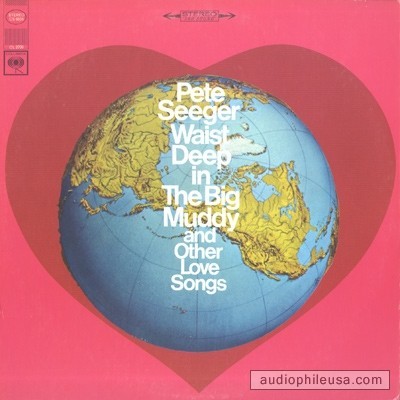
Pete Seeger's rendition of "East Virginia" is a masterclass in Appalachian melancholy, a distilled expression of yearning and the quiet desperation of unrequited love. The song, a traditional folk ballad, paints a stark emotional landscape where the beauty of a woman is inextricably linked to the narrator's profound sense of loss. The opening lines establish a journey, both geographical and emotional, as the singer leaves his birthplace only to encounter a fleeting, idealized figure in North Carolina. The repeated claim that he does not know her 'name and age' suggests the woman is not a fully realized person, but more a projection of the singer's desires, a muse encountered and immediately lost. The vivid imagery of her 'lightsome' hair, 'rosy red' lips, and the 'white flowers' upon her breast evokes a sense of purity and unattainable beauty, further emphasizing the chasm between the singer's longing and his reality.
The heart of the song meaning lies in the stark pronouncement: 'I rather be in some dark hollow / Where the sun refused to shine / Than to see you be another man's woman / And to know you'd never be mine.' This isn't mere heartbreak; it's a visceral rejection of a world where the object of his affection is forever beyond his reach. The 'dark hollow' becomes a metaphor for the singer's internal state, a place of perpetual shadow preferred to the painful reality of seeing her with someone else. It speaks to a deep-seated insecurity and a willingness to embrace isolation rather than confront the pain of unrequited love.
Ultimately, "East Virginia," as performed by Pete Seeger, resonates because it taps into the universal experience of longing and the bittersweet nature of idealized love. The final verse, a repetition of the opening, underscores the cyclical nature of the singer's despair. He remains trapped in a loop of memory and desire, forever haunted by the 'fair young maiden' whose name and age he still doesn't know. The song's power lies not in its complexity, but in its raw, unflinching portrayal of the human heart's capacity for both beauty and profound sorrow.
 View Artist