Song Meaning
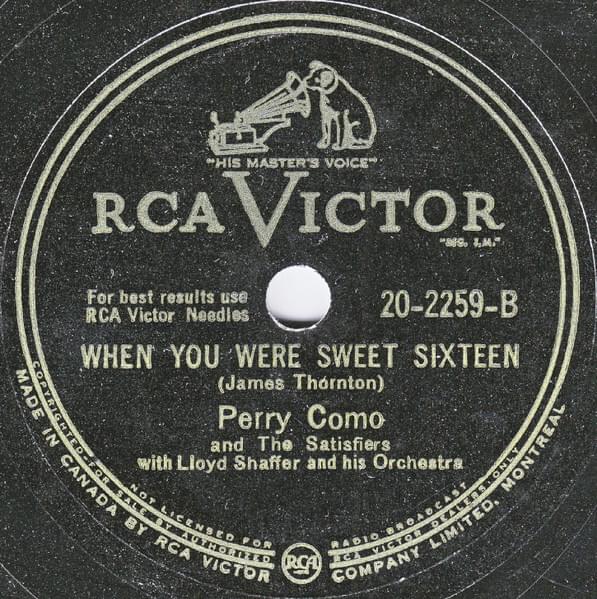
Perry Como's "When You Were Sweet Sixteen" isn't just a sentimental ballad; it's a study in arrested development, a sonic snapshot of a love perpetually frozen in time. The lyrics drip with a yearning for a past that likely never existed in the idealized form Como paints. It speaks to the human tendency to romanticize youth, specifically the intoxicating, naive period of "sweet sixteen." The repeated phrase becomes less a celebration of young love and more a lament for its irretrievability. It's a gilded cage built of memory.
Beneath the surface of this seemingly innocent love song lies a subtle tension. The speaker's declaration, "I love you as I never loved before," clashes with the core sentiment of loving her as he did "when you were sweet sixteen." This contradiction hints at a possible inability to move beyond that initial infatuation. He's not loving the woman she is, but the phantom of the girl she once was. It suggests a relationship stunted by nostalgia, a refusal to acknowledge growth and change. Is this genuine affection, or a carefully curated fantasy fueled by the selective memory of a bygone era?
The repeated plea, "Come to me or my dream of love is o'er," further underscores this desperation. It's a fragile, almost pathetic entreaty, suggesting the entire relationship exists solely within the confines of the speaker's mind. The woman herself is almost incidental, merely a vessel for his idealized projection. In essence, "When You Were Sweet Sixteen" uses the classic ballad form to explore a darker psychological theme: the danger of clinging to the past and the potential for love to become distorted by idealized memories.
 View Artist