Song Meaning
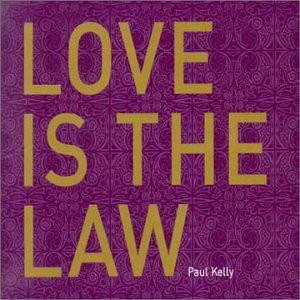
Paul Kelly's "Love Is the Law" isn't just a song; it's a stark, almost brutal meditation on the primacy of love in the human experience. Kelly, known for his narrative songwriting and keen observations of Australian life, here strips away the extraneous, leaving only the essential: love as the ultimate moral imperative. The song's power lies in its simplicity and its unwavering focus on the idea that without love, even the most impressive achievements are rendered meaningless. He's not just talking about romantic love, but a deeper, more fundamental connection to humanity. The lyrics echo familiar sentiments, reminiscent of biblical passages about love's enduring power, but Kelly recontextualizes them for a modern audience, stripping them of overt religious dogma and focusing on the psychological truth at their core. This isn't a gentle suggestion; it's a forceful declaration.
The song meaning hinges on the repeated assertion that without love, one is "nothing." This "nothingness" isn't just a lack of fulfillment; it's a void, a kind of existential damnation. Kelly paints a grim picture of a life devoid of love, describing it as "useless," "living in hell," and "hollow." These aren't just metaphors; they are visceral descriptions of the psychological impact of a loveless existence. The imagery of "an empty horn, a clanging bell" further emphasizes this emptiness, suggesting a life that is loud and attention-grabbing but ultimately devoid of substance or meaning. Even acts of apparent virtue, such as giving away riches or resisting temptation, are rendered hollow without the underlying motivation of love.
Kelly contrasts this bleak vision with a description of love's qualities: patient, kind, truthful, and hopeful. These aren't just abstract ideals; they are the building blocks of a meaningful life, the qualities that allow us to connect with others and find purpose in the world. The repetition of "Love is the law, the law is love" acts as a mantra, reinforcing the idea that love isn't just a nice sentiment; it's the fundamental principle that should guide our actions and shape our lives. In essence, Paul Kelly argues that love isn't just an emotion; it's the very foundation of our humanity, the force that gives meaning to our existence, and the ultimate measure of our worth.
 View Artist