Song Meaning
The lyrics paint a bleak picture of humanity's ultimate fate, trapped by its own limitations despite technological advancement. The repeated question, "Why don't you like it?" sets a tone of frustrated confusion, as if the narrator can't comprehend why things are so dire. The idea of a "digital reset plug" being pulled and a "cyber reset" failing underscores a profound sense of inescapable doom. It feels like a desperate plea to undo a situation that's already beyond repair, highlighting a fundamental inability to change course.
The central tension lies in the stark contrast between humanity's supposed progress and its ultimate failure. We've achieved "unparalleled development" over "millions of years," can manipulate "fire" and "flick," and even "cross the Schwarzschild surface," yet we're still on the "verge of a bad end." The lyrics suggest that despite our capabilities, we're fundamentally flawed, unable to overcome base desires or societal corruption. This is reinforced by the imagery of "Noah's Ark" being full and only accepting the "top few percent," implying a harsh, selective judgment rather than universal salvation.
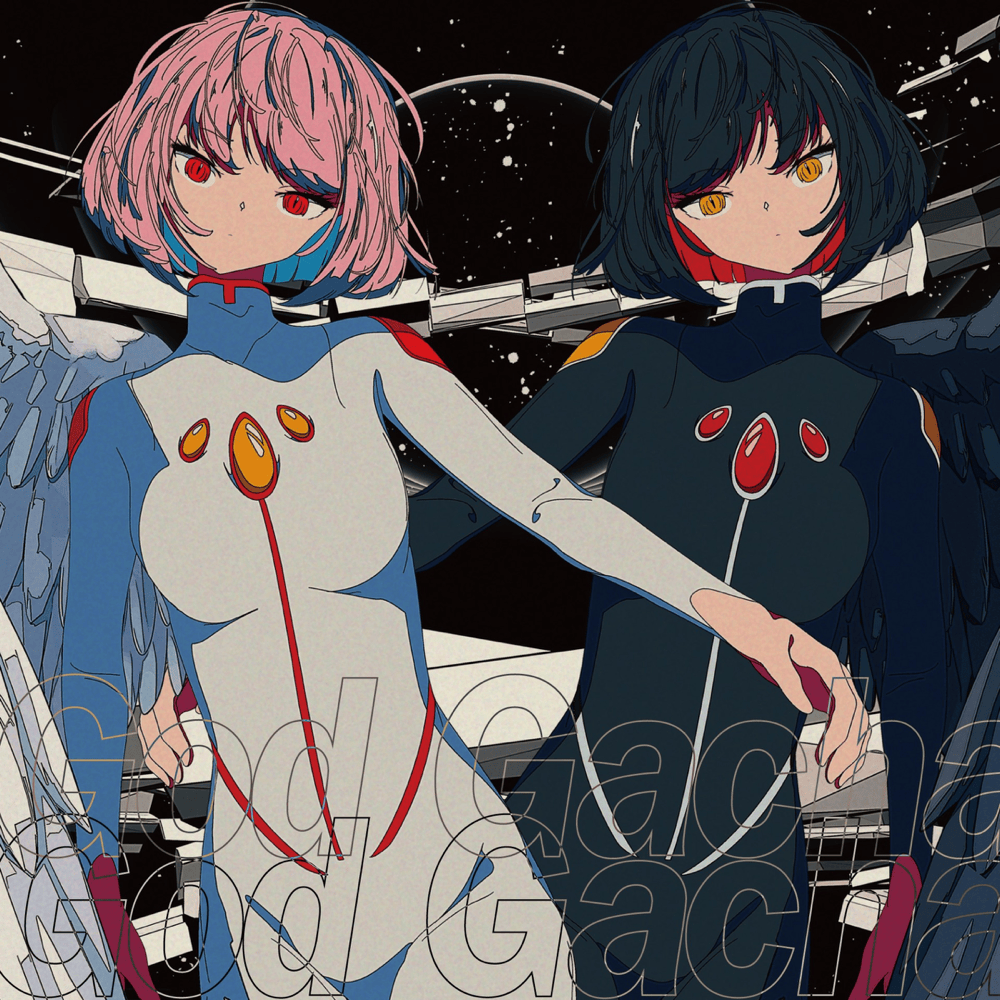
The most striking element is the pervasive theme of randomness and arbitrary selection, encapsulated by the "God Gacha" concept. The repeated "All random, as God says" and the use of children's counting rhymes like "Eeny, meeny, miny, moe" to decide fate are deeply unsettling. This suggests that divine will, or perhaps just the universe's mechanics, operates on chance, not merit or justice. The lyrics further emphasize this with "Rock, paper, scissors" determining who gets on the ark, and later, a "rock-paper-scissors full of dirty tricks and bribery," highlighting that even in a random system, corruption persists.
This lyrical construction is effective because it uses familiar, almost childish, elements like counting rhymes and games to convey an existential dread. The juxtaposition of advanced scientific concepts with primal, arbitrary decision-making creates a powerful sense of cosmic absurdity. The narrator's repeated questioning and the ultimate resignation to a random, flawed system leave the listener with a profound sense of helplessness, questioning the very nature of progress and destiny.