Song Meaning
The narrator clutches a "telegraph," a message on paper, but immediately frames it as ephemeral, "written in sand." This sets up a core tension: the desire for communication or divine pronouncement versus its inherent impermanence and lack of real meaning. The divine voice, when it speaks, offers a twisted validation, telling the narrator, "You're the sinner / That you want to be," suggesting a preordained, perhaps even desired, fallibility. This divine pronouncement feels less like absolution and more like an acknowledgment of a self-fulfilling prophecy.
The chorus hammers home a sense of futility. The "telegraph" exists "across this land," implying a widespread, perhaps even universal, system of communication or belief, yet it "doesn't mean a damn thing." The narrator and others "don't understand" its purpose, leading to the dismissive question, "Who needs telegraph / Anyway?" This suggests a profound disconnect, where the tools of connection and meaning-making are rendered useless or incomprehensible, leaving a void.
Verse two introduces a stark contrast, noting that "Even in America / They understand / The value of religion." This seems to imply that while the narrator's immediate context lacks understanding, a larger cultural force, represented by America and religion, grasps its significance. However, this understanding is immediately re-contextualized: "God's got telegraph / On his side." This divine possession of the "telegraph" is what makes God "powerful" and gives him "pride," framing divine authority not as benevolent guidance but as a source of power derived from controlling the narrative or the means of communication itself.
Ultimately, the lyrics paint a picture of a world saturated with messages and systems of belief that are ultimately hollow or controlled by a higher power for its own gain. The "telegraph" becomes a potent image for any form of communication, doctrine, or divine word that promises meaning but delivers only confusion or reinforces existing power structures. The repeated, almost chant-like "Telegraph" in the outro underscores this pervasive, yet ultimately empty, presence.
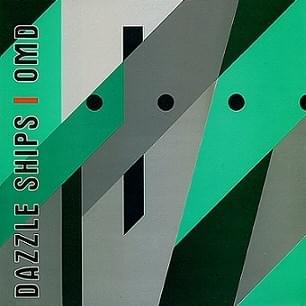
 View Artist