Song Meaning
The lyrics paint a chilling picture of absolute control, where any attempt to question or deviate from a "flawless design" is met with brutal suppression. The narrator, or the voice of the oppressor, directly addresses someone whose "intellect has merely lead you to martyrdom." This suggests a deliberate act of crushing dissent, framing the victim's downfall as a cautionary tale. The initial questions about "plans to overthrow" set a tone of suspicion and immediate retaliation, promising "struggle" and "punishment in execution."
The core tension lies in the stark contrast between the victim's perceived intellectual rebellion and the oppressor's overwhelming, violent response. The lyrics describe a systematic dismantling of the individual, moving from psychological warfare like "corrupting public thought" and "influencing paranoia" to physical mutilation. The severed tongue is a potent image, explicitly stating "there's no freedom of speech anymore," underscoring the regime's absolute silencing of opposition. The repetition of "Your execution" hammers home the finality and severity of the punishment.
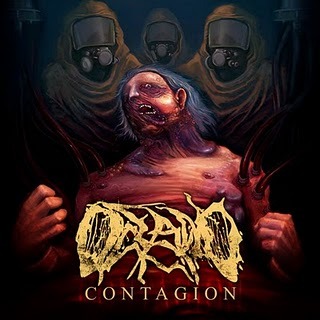
The most striking aspect of the craft is the dehumanization of the victim's ideas, labeling "Your voice and mind the true contagion." This rhetorical move transforms intellectual dissent into a disease that must be "exterminated." The imagery of the body left to "rot" and feed "rodents" is viscerally disturbing, emphasizing the complete erasure of the individual. The repeated phrase "You have failed to deconstruct a flawless design, bow to a real oppressor" serves as a final, damning indictment, positioning the victim's failure not as a personal shortcoming, but as an inability to comprehend and submit to an unchallengeable authority.
This lyrical construction is effective because it creates an atmosphere of inescapable dread and powerlessness. The language is stark and unforgiving, leaving no room for ambiguity about the consequences of defiance. By framing intellect itself as the source of the "contagion," the lyrics justify extreme measures, making the oppressor's actions seem, within their own twisted logic, like a necessary act of purification. The finality of the "extermination" and the chilling simplicity of "Silence is simply that easy" leave the listener with a profound sense of the brutal efficiency of total control.
 View Artist