Song Meaning
The narrator opens with a raw admission of past hurt, stating, "Eu falei baixo me machuquei" (I spoke softly, I hurt myself). This immediately sets a tone of vulnerability and regret, suggesting a previous attempt at communication or expression that backfired. Now, facing the prospect of trying again, there's a palpable hesitation, a sense of having to rebuild after a setback.
The core tension arises from the fear of judgment and the uncertainty of self-expression. The lines "E eu não canto o meu baião / Vocês irão falar que eu dancei" (And I don't sing my baião / You all will say I danced) reveal a deep-seated anxiety about how their authentic self, their "baião" (a traditional Brazilian dance/music style, here representing personal expression), will be perceived and misinterpreted. The narrator anticipates criticism, fearing that their attempts at genuine expression will be seen as something else entirely, perhaps as performative or insincere.
The lyrics then spiral into a series of rhetorical questions that highlight this confusion and indecision: "Quem é que dança quem é que não / Quem que sabe quem é que não / Como é que fica parado ou não" (Who dances, who doesn't / Who knows, who doesn't / How does one stay still or not). This questioning underscores the narrator's struggle to understand social dynamics and their own place within them. The repeated "quem é que não" (who doesn't) emphasizes the pervasive doubt and the difficulty in discerning genuine action from mere appearance.
Ultimately, the repeated refrain "Eu não sei não" (I don't know, I don't know) perfectly encapsulates the emotional and intellectual paralysis. It's not just a simple statement of ignorance, but a profound expression of being overwhelmed by self-doubt and external pressures. The craft here lies in the simple, direct language that builds to this powerful, unresolved conclusion, leaving the listener with the weight of the narrator's uncertainty.
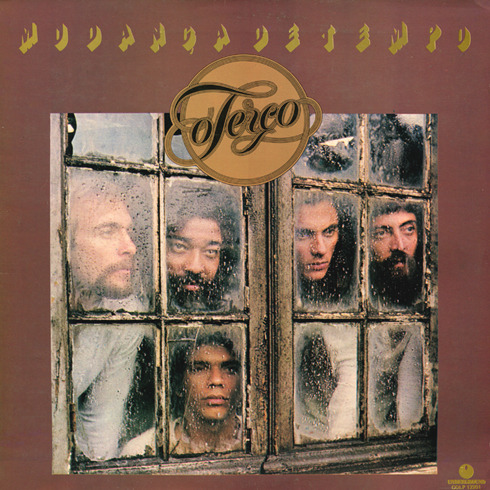
 View Artist