Song Meaning
The lyrics paint a vivid picture of life as a continuous, winding path, not a destination. It opens with a cascade of contrasting ways we navigate existence: through the heart, the head, pain, solitude, crowds, or chance. This relentless listing establishes a tone of overwhelming possibility and inherent uncertainty, suggesting that the journey itself, with all its detours and unexpected turns, is the fundamental experience. The path is presented as something that can lead us back, implying a cyclical nature to our experiences or a return to origins.
The central tension arises from the inherent paradox of living: we are here to experience the world, yet the act of moving through it inevitably leads to missteps and confusion. The repeated phrase "כמה נלך ככה נתעה" (the more we walk, the more we will stray) underscores this feeling of being lost even as we progress. Life is framed as "כל מה שיהיה" (everything that will be), a passive acceptance of whatever unfolds, highlighting a struggle between agency and fate. The lyrics acknowledge the presence of "ים טעויות" (an ocean of mistakes) as an unavoidable part of this journey.
The most striking craft element is the pervasive repetition of "דרך" (way/path), acting as a structural anchor and thematic core. This word is juxtaposed with an astonishing array of human experiences and conditions – from "קולות" (voices) and "פנים" (faces) to "תפילות" (prayers) and "חרב הזמן" (the sword of time). The lyrics also introduce poignant images like "חול באגרוף יובש בפה" (sand in a fist, dryness in the mouth), evoking a sense of futility and struggle. The final stanza offers a glimmer of hope through the eyes of a "ילד צוחק כאן על החוף" (child laughing here on the beach), suggesting that an "אינסוף" (endless) path can be seen through innocent wonder.
Ultimately, these lyrics resonate because they capture the universal feeling of navigating life's complexities without a clear map. The constant invocation of "דרך" grounds the listener in the immediate, often difficult, present, while the acknowledgment of mistakes and the eventual embrace of what will be offer a profound sense of shared human experience. The writing doesn't offer easy answers but rather a reflective, almost stoic, acceptance of the journey's inherent messiness and beauty.
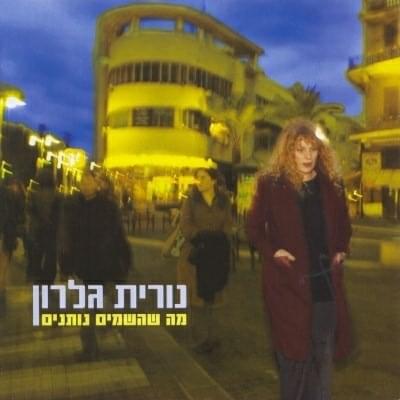
 View Artist