Song Meaning
The narrator's mother arranged her marriage, a union that was clearly not her choice. The opening lines, "Me casó mi madre" repeated twice, immediately establish a sense of obligation and lack of agency. The description of herself as "Chiquita y bonita" – small and pretty – suggests she was seen as an object to be married off, rather than an individual with her own desires.
The core tension arises from the narrator's unwanted marriage to a boy she "no quería" – didn't want. This forced union is underscored by the husband's daily disappearance, "Desaparecía," leaving her alone and waiting. Her longing is palpable as she watches from the balcony, "Me salí al balcón," hoping for his return, a poignant image of a wife yearning for a husband who is absent, perhaps emotionally as well as physically.
The lyrics cleverly use repetition to build a sense of melancholic resignation. The repeated phrases mirror the monotonous routine of her life and her persistent, unfulfilled hope. The shift in perspective in Verse 5, from her waiting to the observation that passersby "Se le parecían" – looked like him – highlights her obsessive focus on this absent figure. This subtle detail reveals the depth of her fixation, even when he's not there.
Ultimately, the song captures the quiet desperation of a woman trapped in an arranged marriage. The husband's eventual return, calling "Ábreme, María," and his plea that he's "Dе buscar la vida" – looking for a living – offers a glimpse into his own struggles, but it doesn't negate the narrator's initial unhappiness. The effectiveness lies in its simple, direct language that conveys a profound sense of longing and a life dictated by others.
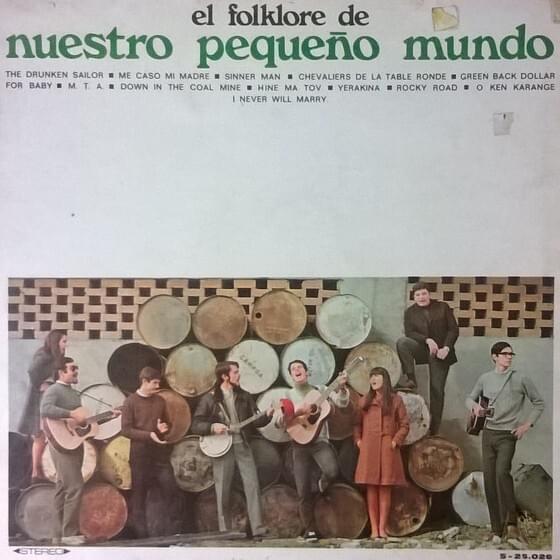
 View Artist