Song Meaning
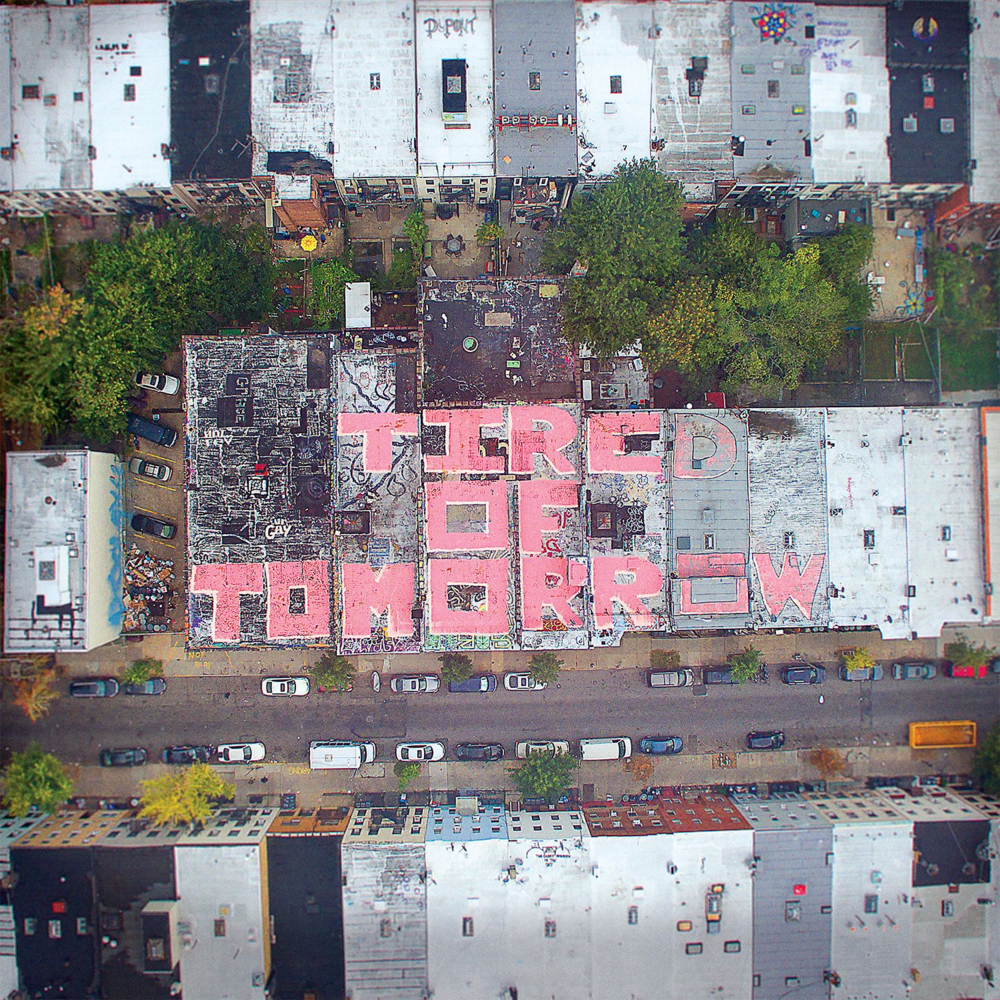
The narrator is leaving Los Angeles, which has become a desolate place, and is heading East. This journey feels less like a fresh start and more like a descent into a spiritual void, described as 'mouths of Heaven' that 'devour me.' The immediate feeling is one of being trapped, not just in the present moment but in a profound internal weariness with the future itself. The phrase 'tired of tomorrow' suggests a deep-seated exhaustion with hope or anticipation.
The core tension lies in the contrast between outward appearances and internal reality. The narrator speaks of being 'draped in rusty chains' and having 'the faintest of skin,' hinting at a state of decay or weakness. Yet, there's a grim pretense of carrying on, even to the point of 'tak[ing] the war to bed,' implying a destructive continuation of conflict within relationships or oneself. The cyclical nature of 'children will come / Children will go' underscores a sense of futility, as if life's events are merely repeating without progress.
The most striking image is the juxtaposition of 'rusty chains' and 'the faintest of skin' against the idea of 'taking the war to bed.' This paints a picture of profound internal struggle and decay masked by a performative continuation of life's battles. The lyrics suggest a pervasive emptiness, where even the prospect of alliance or unity ('Rejoice if we are allied') is undermined by the internal void: 'our everything / Is empty on the inside.' This internal desolation is the true graveyard, more potent than the one left behind in LA.
This writing is effective because it grounds abstract feelings of despair in concrete, albeit bleak, imagery. The physical journey East becomes a metaphor for an internal descent. The weariness isn't just about the present; it's a profound fatigue with the very concept of future possibility, making the narrator's internal state feel both specific and powerfully resonant.
 View Artist