Song Meaning
The lyrics paint a picture of someone grappling with the mundane and the desire for something more, even something monstrous. The opening lines set a tone of weary repetition, a "four-part, eight-part" struggle with everyday life, symbolized by the "gum, chocolate, pineapple" and the feeling of being a "lonely pill" with no proper dosage. There's a palpable sense of being stuck, wanting to transform into something "异形" (otherworldly or monstrous) on nights when the ordinary feels suffocating.
This internal conflict escalates as the narrator describes feeling like a "fashion model" under immense pressure, performing for an unseen audience. The desire to "dig up oil" even if "all humanity is just reading" suggests a desperate need for a breakthrough, a way to escape the perceived futility. The recurring refrain of "圣人君子成り損ねた" (failed to become a saint or gentleman) highlights a self-perceived inadequacy, a feeling of being a "remnant of dreams" and "waste product."
The core tension lies in the narrator's oscillation between wanting to be a "大衆的善人" (commonplace good person) and a "完全なアヤカシ" (complete yokai/monster). They acknowledge the superficiality of being a "good person," recognizing that beneath it lies a "凡人" (ordinary person) who is "dancing, dyed to the bone." The desire to become a yokai in the next life, to "leap about freely," is a powerful expression of wanting to shed the constraints of normalcy and embrace a wild, untamed existence, to "survive with shape-shifting ability."
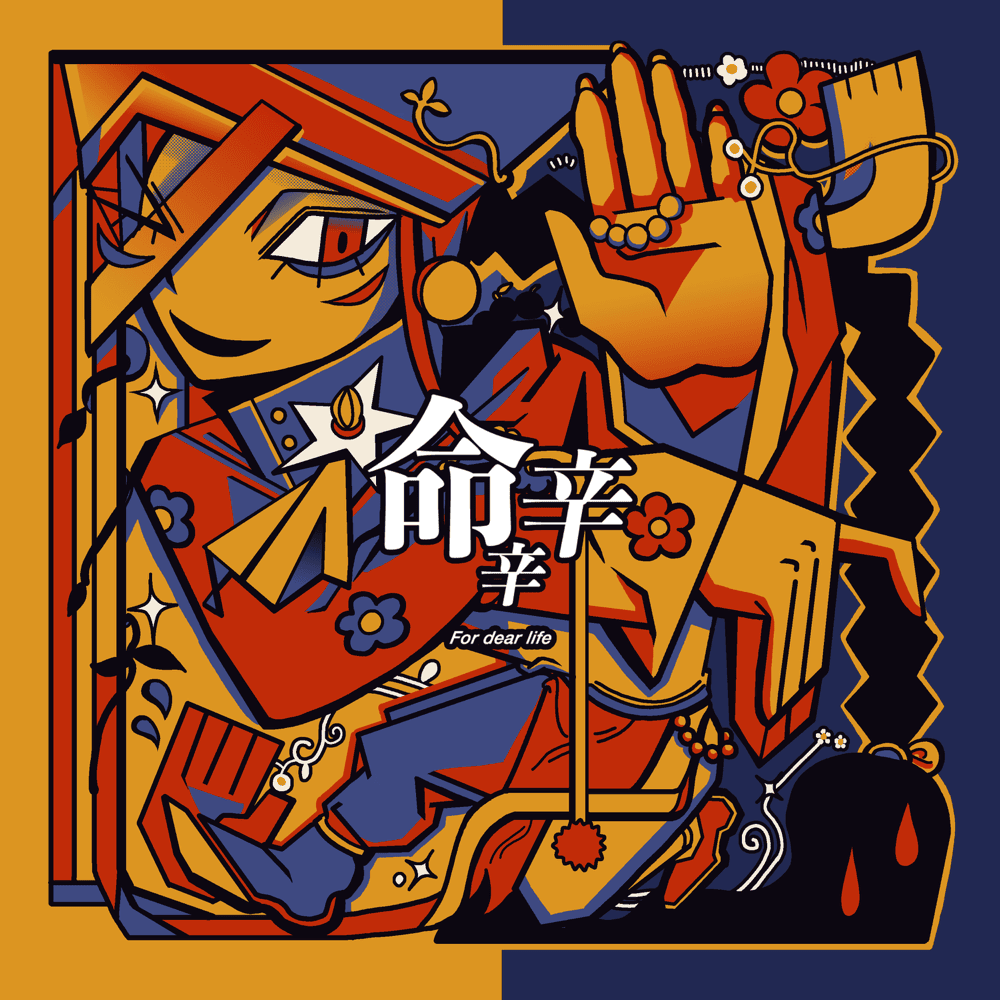
The lyrics' effectiveness comes from this stark contrast between the desire for simple goodness and the yearning for monstrous freedom. The repetition of "命辛辛" (for dear life) underscores the desperate struggle to simply exist, while the imagery of "pink elephants" and "yokai games" creates a surreal, almost feverish atmosphere. It’s this push-and-pull between being a "模範囚的迷人" (model prisoner-like lost soul) and a "変幻自在" (shape-shifting) entity that makes the narrator's plight so compelling.