Song Meaning
The narrator is pleading with a lover to leave her as if he never loved her, specifically at dawn, admitting she doesn't even know the reason for the separation. This immediate contradiction sets a tone of confusion and hurt, suggesting a breakup initiated by the partner that feels both abrupt and inexplicable to her. The repetition of her not knowing the reason underscores a deep sense of bewilderment.
The core tension arises from the narrator's conflicting desires: she tells him to leave, yet immediately follows with a desperate plea for him to return, asserting he'll never find love like hers again. This push-and-pull reveals a profound dependency and a refusal to accept the abandonment, even as she seems to acknowledge its finality by telling him to leave "as if he never loved me." The threat to go and get him if he doesn't return highlights a desperate, almost possessive, need.
The most striking aspect is the narrator's shifting stance and the implied unspoken understanding. She first asks him to leave, then demands he return, and finally envisions a future where he'll be by her side forever. The lines "We'll say then what we have / What we are silent about, and already know" point to a complex, perhaps toxic, dynamic where communication has broken down, replaced by assumptions and unspoken truths. This suggests a relationship built on a foundation of unaddressed issues.
This lyrical structure is effective because it mirrors the chaotic emotional state of someone reeling from a sudden rejection. The direct address, the repetition of key phrases like "ne znam ni ja sama" (I don't know myself) and "neću moći" (I won't be able to), and the stark contrast between telling him to go and begging him to stay create a raw, visceral portrayal of heartbreak. It’s this raw vulnerability, coupled with the underlying sense of unresolved conflict, that makes the plea so potent.
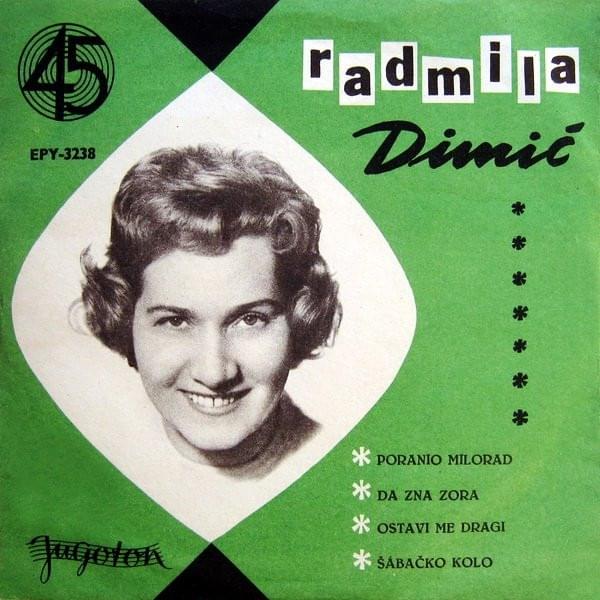
 View Artist