Song Meaning
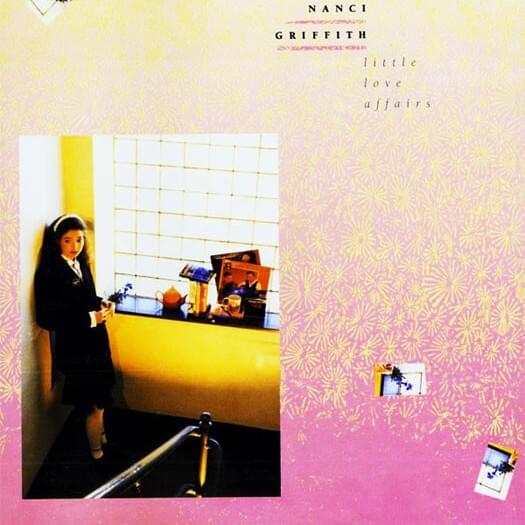
{"song_id": 12737971, "meaning": "Nanci Griffith's rendition of \"I Would Change My Life\" isn't just a country ballad; it's a raw, exposed nerve of regret and the desperate yearning for a second chance. The song's power lies in its simplicity: a direct, almost pleading confession of someone grappling with the aftermath of a relationship's demise. Penned by Robert Earl Keen Jr., the lyrics cut straight to the quick, painting a picture of abandonment and the agonizing self-awareness that often follows. The opening lines immediately establish the core conflict – a departure fueled by discontent, leaving the narrator to confront the painful reality of being left behind. It's the universal sting of rejection, amplified by the knowledge of one's own failings. The stark admission, \"Leaving never hurts as much as being left behind,\" underscores the profound vulnerability at the heart of the song. Griffith's delivery amplifies this emotional weight, her voice carrying the burden of unspoken words and missed opportunities.
The chorus, a repeated mantra of self-reproach, becomes the song's central plea. \"I would change my life/ I would make it right/ I would change my life/ If you would only change your mind.\" It's not merely a promise of reform; it's a desperate bargain, a willingness to completely reconstruct one's existence for the sake of reconciliation. The verses delve into the specifics of the narrator's perceived shortcomings: wasted time, squandered resources, and clouded memories. \"I have spent many hours on some misbegotten dream/ I have spent my money on some foolish hearted things/ I have spent my memory on old embittered wine.\" These lines aren't just about financial or temporal waste; they represent a deeper squandering of emotional energy and potential. The \"misbegotten dream\" could symbolize misplaced priorities, while the \"foolish hearted things\" might represent fleeting distractions that ultimately led to the relationship's downfall. The \"old embittered wine\" hints at a past steeped in negativity, suggesting a pattern of behavior that contributed to the partner's departure.
The final verse escalates the feeling of helplessness, the narrator wishing for the power to conjure the right words, to finally express the things that were left unsaid for too long. \"I wish that I could find the words to make you come back home/ I wish that I could say the things you needed for so long/ I wish that you could see me, maybe then you'll find.\" It's a poignant acknowledgement of the communication breakdown that likely plagued the relationship, the regret of not being able to articulate the necessary sentiments before it was too late. The repeated desire for the partner to \"see me\" suggests a hope that, beneath the surface of past mistakes, there's still a glimmer of understanding, a chance for empathy to bridge the gap created by distance and resentment. Ultimately, \"I Would Change My Life\" is a powerful exploration of regret, the desperate yearning for redemption, and the humbling realization that sometimes, the opportunity for change comes only after it's already too late."}
 View Artist