Song Meaning
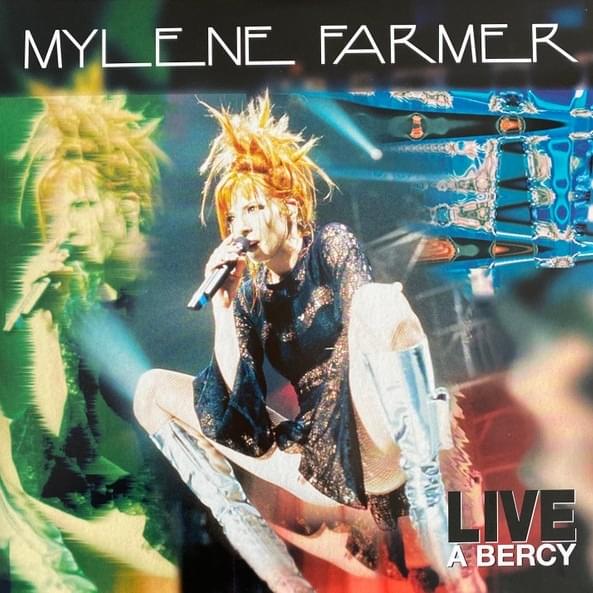
Mylène Farmer's "Vertige (Live à Bercy 96)" isn't just a song; it's an existential tightrope walk. The recurring phrase "Je vertige de vivre" (I am dizzied by living) sets the tone, immediately plunging us into a state of profound disorientation. Farmer isn't merely acknowledging life's inherent instability, she's embracing the vertigo itself as a pathway to deeper understanding. Rain, a symbol of both cleansing and vulnerability, is juxtaposed with nudity, suggesting a stripping away of artifice to confront the raw, unvarnished truth of existence. This vulnerability is further emphasized by the plea, "Nuit sois plus lente," a yearning to prolong the moments of clarity found in the darkness. The ephemeral nature of life, the fleeting beauty of existence, is presented as not a tragedy, but an essential part of the journey. Like clouds, like a necessary drop of water, we are transient elements contributing to a larger, cosmic voyage.
"Plus loin plus haut," (further, higher) becomes a mantra, a push towards transcendence. The lyrics suggest that through this dizzying experience of life, we can reach our "astre" (star) and experience an awakening of the senses. This ascent is not just physical; it's a spiritual journey, a dance of instinct that leads to ecstasy and a sense of vastness. The repetition reinforces the idea that the path to enlightenment lies in constantly pushing beyond perceived limits. The song subtly hints that the discomfort we feel when confronted with the immensity of life is, paradoxically, the very thing that propels us forward.
However, the song doesn't shy away from acknowledging the darker aspects of human existence. The mention of "chaînes, pluie d'acier" (chains, rain of steel) and the observation that "son ignorance est sa souffrance" (his ignorance is his suffering) introduce themes of oppression and the pain caused by a lack of understanding. Farmer doesn't offer simplistic answers or escapism; instead, she juxtaposes these harsh realities with the beauty of the "ballet d'étoiles" (ballet of stars), reminding us that even in the face of suffering, there is still wonder to be found. The final assertion, "Instant présent tu es l'essence / Du voyage" (the present moment is the essence / of the journey), brings the song full circle. It's a call to be fully present, to embrace the vertigo, and to recognize that the journey itself, with all its dizzying highs and lows, is the ultimate destination.
 View Artist