Song Meaning
The lyrics open with a stark image: a narrator feeling "the only one awake" amidst "human bodies sleeping while driving." It immediately establishes a world operating on autopilot, a collective somnambulism. This comfortable existence, it seems, has a hidden cost. The narrator themselves can "just barely keep myself up."
This comfortable life, however, isn't entirely benign. The imagery of "warm water rising" and "accumulating dust" suggests a slow, almost luxurious decay or stasis. The house, brightly lit and "working" "all day long," projects an image of busy productivity, yet remains oblivious to the external reality, "not knowing it's raining." There's a profound disconnect between internal effort and external awareness.
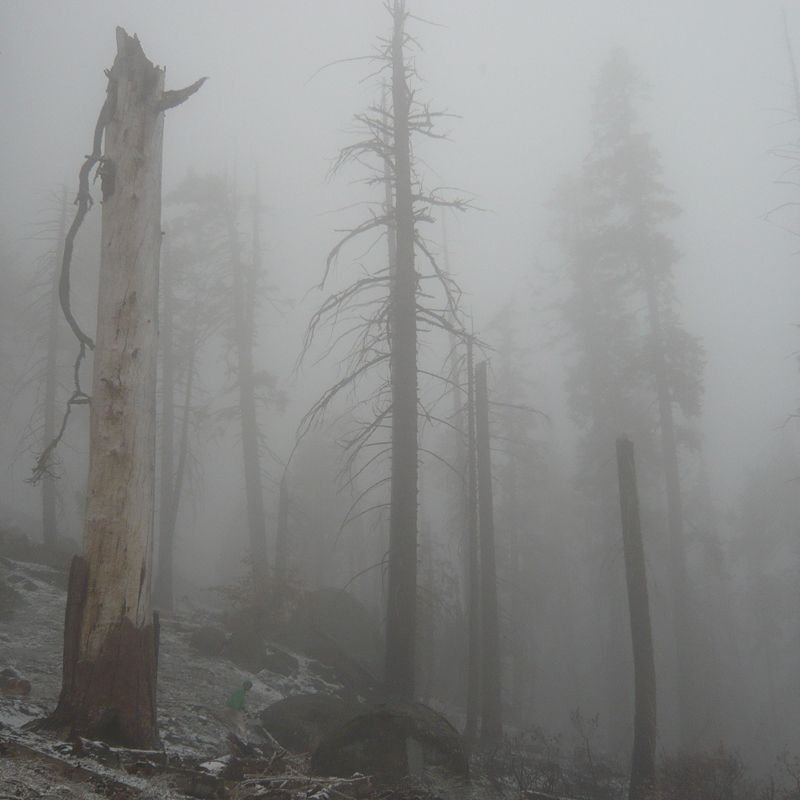
The narrative takes a sharp turn just "before going to bed." A sudden "call out the back door" shatters the insulated routine, pulling the narrator into a tangible, external world. The appearance of "an owl," the sensation of "grass is wet," and the question "What's that other sound?" mark a crucial awakening. This shift from internal, oblivious comfort to external, sensory engagement is pivotal.
The effectiveness of these lyrics lies in this quiet, almost reluctant awakening. The initial sense of being "lulled" by a comfortable but ultimately isolating existence gives way to a subtle, yet profound, moment of connection with the natural world. The final, delicate observation of "The air in the branches" suggests that true awareness often resides in the quietest, most overlooked details, far from the brightly lit, oblivious house.
 View Artist