Song Meaning
{"song_id": 12372291, "meaning": "Miles Davis's interpretation of \"Autumn Leaves\" isn't just a melody; it's an emotional weather report. The song, already a standard before Davis touched it, uses the imagery of autumn as a metaphor for loss and the fading of love. The falling leaves aren't just pretty; they're symbolic of something dying, of a relationship that's reached its inevitable end. The initial English lyrics paint a picture of longing, a recollection of summer's passion now cooled by the chill of absence. The \"sun-burned hands\" and \"summer kisses\" are sensory anchors to a happiness that's slipping away, replaced by the encroaching \"winter's song\" – a stark premonition of loneliness.
The shift to French lyrics (\"\u00c8est une chanson, qui nous ressemble\") deepens the emotional resonance. It's no longer just about missing someone; it's about the shared history, the intimate connection that once defined the relationship. The lines \"Toi tu m'aimais et je t'aimais\" – \"You loved me and I loved you\" – are simple yet devastating in their acknowledgment of mutual affection now lost. The transition highlights the universality of heartbreak; it transcends language, becoming a shared human experience.
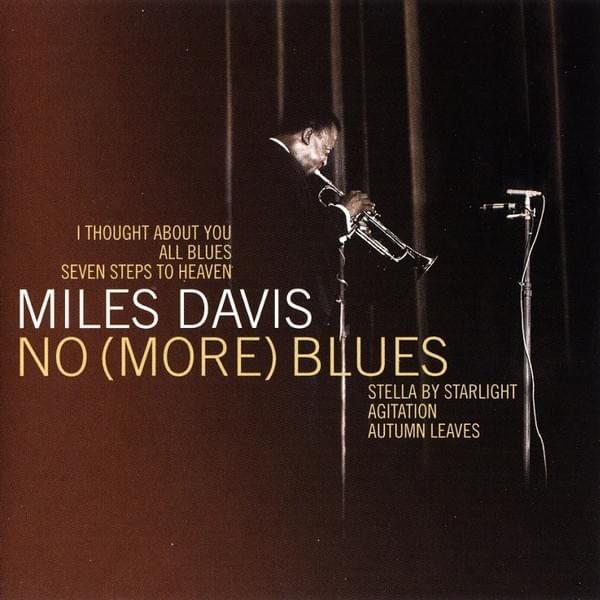
What Davis masterfully achieves through his instrumental interpretation is an amplification of this melancholic core. Without uttering a single word, his trumpet conveys the quiet devastation that the lyrics only hint at. It’s the sound of regret, of memories echoing in the silence left by a departed lover. The improvisational nature of jazz adds another layer, suggesting the unpredictable, often chaotic nature of grief itself. \"Autumn Leaves,\" in Davis's hands, becomes a sophisticated meditation on love, loss, and the poignant beauty of impermanence."}
 View Artist