Song Meaning
The lyrics paint a picture of a personal decline, marked by a sense of resignation and a struggle with connection. The opening lines, "Pale horse songs of a slow decline," immediately establish a somber, almost biblical tone, suggesting an inevitable fading or spiritual decay. This is contrasted with "Sideshow words" and the idea that "if the songs don't mind," hinting at a performative or superficial aspect to this decline, perhaps a way to mask deeper issues.
The central tension arises from the narrator's attempt to escape this state, stating, "I thought I'd left that all behind." Yet, the repetition of this phrase, coupled with the imagery of "Pale horse vows in the sacred signs / Traded for an infinite aloneness to find," suggests that this escape is illusory. The narrator seems to have exchanged one form of commitment or guidance for a profound, perhaps self-imposed, isolation, finding only empty signs like "imagination is important" without a clear path forward.
The craft here is in the juxtaposition of grand, almost apocalyptic imagery (pale horse, black horse reaping) with mundane, everyday struggles. The line "But how to fit your thoughts in mine?" is particularly striking, cutting through the larger themes to reveal a core difficulty in genuine intimacy or understanding. This personal disconnect is amplified by the echo of "'You abide in me, and I in you,' / But what exactly should I do?" – a quote that implies unity but is met with profound confusion and inaction.
Ultimately, these lyrics resonate because they capture the feeling of being stuck in a downward spiral, even when one believes they've moved past it. The struggle isn't just external; it's an internal battle with connection, purpose, and the very meaning of the signs we follow. The narrator's repeated assertion of having left something behind, only to be confronted by its persistent presence, creates a poignant sense of unresolved internal conflict.
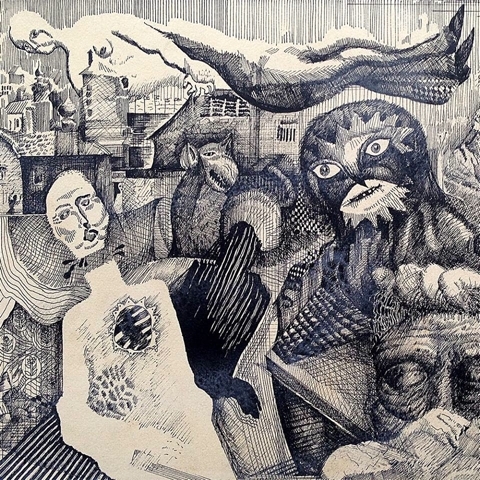
 View Artist