Song Meaning
The lyrics present a stark, almost overwhelming sense of presence, blurring the lines between self and other. The opening lines, "Let us die, let us die / And, dying, we reply," immediately establish a tone of profound, almost defiant resignation. This isn't a plea for help, but a declaration of a shared, perhaps fatal, state of being. The narrator insists on their own experience, pushing back against external sympathy with a demand to "look in our eyes." This sets up a core tension: an intense internal world that resists external interpretation.
The central conflict seems to be the narrator's inescapable connection to another person, so profound it borders on erasure of self. The lines "Wherever she rests her head / In the softness underneath / She'll feel me / And you'll feel me" suggest an all-encompassing, almost parasitic intimacy. This isn't just about shared feelings; it's about a shared physical and emotional space where the narrator's presence is a constant, unavoidable sensation. The French interjection, "Je n'ai pas d'espoir" (I have no hope), underscores the inescapable nature of this bond, framing it as a condition without escape.
The most striking aspect of the craft is the way the narrator infiltrates the other person's sensory experience. They claim to be present in laughter, tears, and even declarations of love. The imagery of being "like poison on your tongue" is particularly potent, suggesting a love or presence that is both desired and destructive. This is contrasted with the soothing image of "singing you to sleep," highlighting the dual nature of this overwhelming connection – it can be both a torment and a strange form of comfort.
Ultimately, these lyrics hit hard because they articulate a terrifying intimacy, one where boundaries dissolve completely. The narrator's voice is not just speaking *to* someone, but seems to be speaking *from within* them, inhabiting their very being. The power lies in the unsettling portrayal of a connection so deep it becomes a form of shared existence, blurring the lines between "I" and "you" into a shared, inescapable "us."
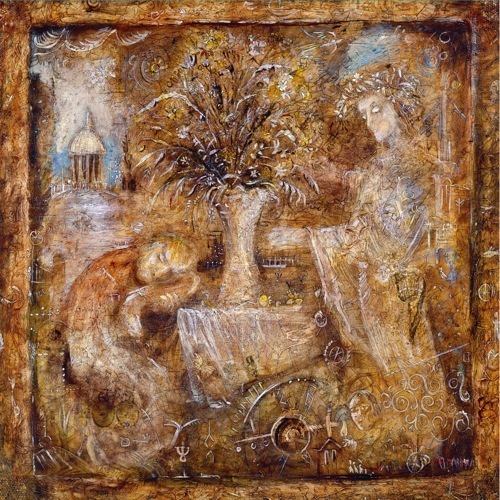
 View Artist